
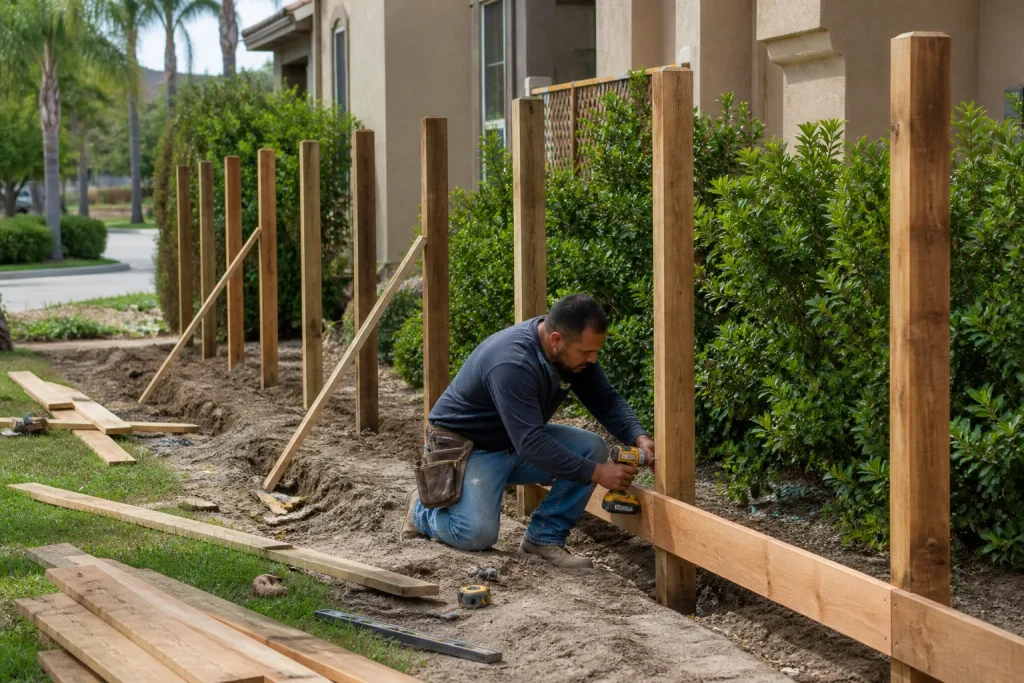
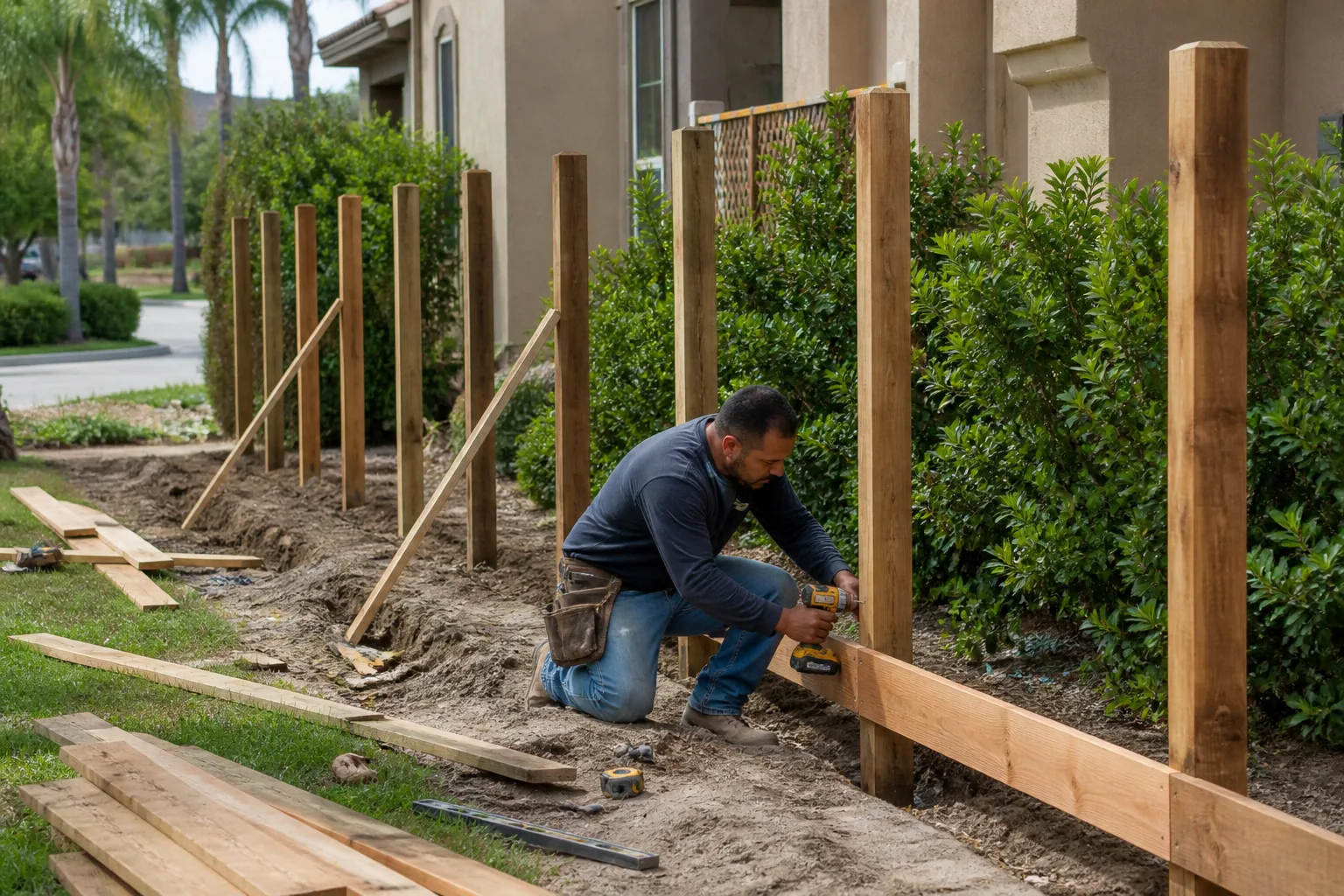
5 Mistakes to Avoid With Fence Installation
Roughly one in five fence disputes in California involves a fence built 6 to 18 inches onto a neighbor’s property, and Irvine’s older tract neighborhoods are especially vulnerable because recorded lot lines don’t always match the landscaping boundaries homeowners see in the yard. The expensive part of a fence mistake usually isn’t the build itself; it’s the survey, the permit, or the neighbor conversation that never happened before the first post went in. If you’d rather not gamble on that paperwork, call (888) 578-4462 and we’ll walk you through it.
Mistake #1: Trusting a Plot Map Instead of a Recorded Survey
A plot map is a rough sketch the builder filed decades ago. A recorded survey is a licensed surveyor’s measurement of where your property line actually sits. They disagree more often than people expect. In Irvine’s older tract neighborhoods, landscaping crews have shifted borders for years, so the hedge your neighbor mows may sit two feet on your side, or the fence you’ve always assumed was shared may not be shared at all.
Before any fence goes in the ground, pull the survey on file with the city or hire a surveyor to mark the corners. It costs money. A boundary dispute costs a lot more, and California courts generally don’t care that “the old fence was there already.”
What to check before you dig:
- Locate your recorded survey or plat map at the city or county recorder’s office.
- Confirm the corners are physically marked, not just drawn.
- Flag any utility easements along the line before you settle on post placement.
- Talk to the neighbor before the stakes go in. A five-minute conversation beats a certified letter.
In our experience, this step is where most Irvine fence projects quietly go sideways, and it’s the one nobody budgets for.
Mistake #2: Skipping the Permit or Guessing at Irvine’s Height Rules
Irvine doesn’t have one blanket fence rule. Height and material depend on the zoning district your property sits in and where the fence runs relative to the front, side, and rear yard lines. A fence that’s fine between backyards can be over the limit in a front-yard setback. Pool fences carry their own separate requirements, and anything above the standard height usually triggers a variance application with published noticing, time, and a fee.
Here’s what catches people:
- Front-yard and corner-lot fences are held to tighter limits than rear-yard fences.
- Material matters. Some districts restrict solid masonry or tall privacy fencing facing the street.
- Pool barriers are a separate code track from a general property fence.
- Corner lots have sight-distance triangles at the intersection that override what you’d expect.
Call the city before you buy a single panel. Ask which district your address falls in and what the front, side, and rear limits are. An unpermitted fence can mean a stop-work order, a removal order, or a fine when you go to sell. Pulled permits and passed inspections are part of every project we hand off, and that paper trail is what protects your resale.
Mistake #3: Getting the Concrete-to-Post Ratio Wrong
Posts heave when the concrete footing is undersized for the soil. Irvine’s expansive clay soils swell and shrink with seasonal moisture, and an under-poured footing gives that movement somewhere to go. Three years later, you’ve got a leaning gate, gaps under pickets, and panels that look like they were installed by an earthquake.
What a proper footing looks like:
- Hole depth roughly one-third of the post’s above-ground height, and never shallower than the frost and soil conditions demand.
- Concrete volume that fills the hole around the post, not just a bag dropped at the bottom.
- Footings that sit below the active soil layer so movement doesn’t grab the post.
- Proper drainage so water doesn’t pool at the base.
A post set in a shallow hole with a splash of concrete is the most common shortcut we see. It looks fine on day one. It’s the reason gates start dragging within a few Irvine summers. Ask your installer how deep the holes will be and how much concrete goes in each one. A good contractor answers without flinching.
Mistake #4: Taking “We’re Licensed” at Face Value
Anyone can say they’re licensed. The Contractor State License Board publishes a free lookup, and a lot of fence crews don’t survive it. Run the number yourself before you sign anything. A licensed fence contractor shows an active license, a classification that covers fencing work, and a bond on file.
What to look for in the CSLB lookup:
- Status: active, not expired, suspended, or revoked.
- Classification: the license type actually covers fence and landscape work.
- Bond: a current contractor’s bond is filed.
- Complaints: a public record of complaints and disciplinary actions.
Also confirm the crew will carry workers’ comp. If an uninsured helper gets hurt on your property, that’s a problem with your name on it. In our experience, the crews that answer these questions cleanly are the same ones that show up on the scheduled day. The ones that dodge are telling you something.
Mistake #5: Not Knowing California’s Shared-Fence Rules Before You Start
California Civil Code 841 governs boundary fences between neighbors. The short version: adjoining landowners are generally presumed to share the reasonable cost of a boundary fence, even if only one of them wants it. That’s useful leverage. It’s also why boundary fence projects get tense.
What 841 doesn’t do is let you build onto someone else’s land, or force a neighbor to accept a fence style they never agreed to. The clean path is a written agreement covering the location, the style, the height, the material, and who pays what. Get it before the first post goes in, and keep a copy.
What we’ve seen go wrong: neighbors agreeing verbally, the fence going up 8 inches over the line, and the relationship going south the moment a surveyor gets involved. Handle the conversation and the paperwork first. The fence is the easy part.
The Bottom Line
Fence installation mistakes in Irvine happen before the build, not during it. Confirm the survey, check the zoning and pull the permit, size the footings for expansive soil, verify the license through the CSLB, and get the Civil Code 841 conversation in writing with your neighbor. Do those five things and the build itself tends to go smoothly.
The 730-Day Done Right Promise covers every fence project we take on, and if something isn’t right, we make it right. Our technicians have up to 12 years of experience, work is background-checked and uniformed, and calls are answered by a live person 24/7. From foundation to finish line, one contractor handles the whole scope. If you’re in Irvine and want help with the survey-to-permit sequence, Groundwork Construction Co. of Irvine offers a free project estimate and design consult. Call (888) 578-4462.
Related services in Irvine: If your project runs beyond the fence line, we also handle Fence Installation in Irvine and Driveway & Pavers in Irvine, and you can start at the Groundwork Construction Co. of Irvine home page to see the full scope, including Home Additions & ADU in Irvine when a fence becomes part of a bigger yard build-out.
Frequently Asked Questions
In most cases, yes. Irvine sets fence height and material limits by zoning district, and a fence above the allowed height or in a restricted yard location typically needs a variance. Call the city with your address before you buy materials, and pull the permit before the first post goes in.
Cost depends on material, length, terrain, and footing depth, so a written line-item quote is the only number worth trusting. An undersized footing is the most common cause of a cheap-looking bid, and it costs more to fix later than to build right the first time. Call (888) 578-4462 for a free estimate. Our pricing is upfront, and the number you see is the number you pay.
Civil Code 841 presumes adjoining landowners share the reasonable cost of a boundary fence. It doesn’t allow one neighbor to build onto the other’s property or dictate a style without agreement. Get it in writing before the work starts.
A standard residential fence in Irvine is often a multi-day job once the survey, permit, and footings are handled, and most of the timeline is set by permitting and concrete cure time, not the build itself. We’ll give you a real schedule in the written quote, not a guess. Call (888) 578-4462 to schedule your free estimate.
Written by the team at Groundwork Construction Co. of Irvine.
Need Construction Help?
Call Groundwork Construction Co. of Irvine - licensed & insured, here with fast after-hours help in Irvine.
(888) 578-4462