
Last updated November 17, 2026
 Bathroom remodeling
 Kitchen remodeling
 Home additions & ADU
 Roofing
 Windows & doors
 Driveway & pavers
 Fence
Free written scope consultation - allowances, timeline, and change-order rules on paper before a single trade is scheduled
Bathroom Remodeling Warning Signs Every Homeowner Should Know
Most bathroom remodel disasters aren’t surprises. They’re warnings nobody knew how to read. The bid that came in $9,000 under everyone else. The contractor who couldn’t produce a lien waiver when asked, then got defensive about it. The shower pan that looked fine at the final walkthrough and smelled wrong by month four. We’ve walked into Irvine homes where the tile was set beautifully over a waterproofing layer that was never installed, and the homeowner had no idea until the ceiling below started staining. This guide is the field manual we wish every homeowner had before signing: the red flags that show up before the contract, during construction, and in the first year after the job is “done.”
Quick Answer
The biggest bathroom remodeling warning signs are vague scope language in the contract, bids that land far below the rest, pressure to start immediately without permits, skipped waterproofing steps you can spot during construction, and post-completion symptoms like efflorescence on grout, soft flooring at the toilet base, and mirrors that stay fogged longer than they should. Any single one of these is a reason to slow down and ask questions. Two or more together means walk away.
Styles & brands we work with
- Kitchen remodeling
- Bathroom remodeling
- Home additions & ADU
- Roofing
- Windows & doors
- Driveway & pavers
- Fence
Table of Contents
- Pre-Contract Warning Signs: What to Catch Before You Sign
- Why an Unusually Low Bid Is a Warning, Not a Win
- The Permit Question That Separates Pros From Pretenders
- On-Site Warning Signs During Construction
- Waterproofing and Shower Pan: The Shortcuts You Can Actually See
- Mid-Project Change Orders: Legitimate Scope vs. Price Manipulation
- Post-Completion Warning Signs in the First 90 Days
- What to Do If Your Contractor Goes Quiet After Final Payment
Pre-Contract Warning Signs: What to Catch Before You Sign
A contractor who can’t produce a lien waiver on request isn’t just disorganized. It’s one of the top indicators that subcontractors aren’t being paid, and that can put a lien on your Irvine home even after you’ve handed over the final check. That’s the part that shocks people. You paid in full, the work looks finished, and six months later a tile setter you’ve never met files a mechanics lien against your property because the general contractor pocketed the money and never paid him.
Before you sign anything in Irvine, read the scope of work line by line. Vague language is where the money hides. Here’s what to look for:
- “Install tile per industry standards” – Which standards? Which tile? Which grout? Which substrate? A real scope names the product, the brand, the model number, and the prep work.
- “Replace as needed” – As needed by whose definition? This is an open door to a change order later.
- “Waterproof shower area” – Waterproof how? With what membrane? Applied by whom? This one phrase is where half the shower failures we see in Irvine begin.
- No mention of permits – In Irvine, bathroom remodels that move plumbing, electrical, or structural elements need permits. If the contract is silent, ask directly.
- No lien waiver clause – You want the right to request conditional and unconditional lien waivers from the general contractor and every subcontractor before each draw.
- No start date and no completion date – “Start when materials arrive” is not a schedule. It’s an escape hatch.
We’ve also seen contracts where the allowance for tile or fixtures is set absurdly low ($800 for a full shower surround) so the base bid looks competitive. The moment you pick something real, the change orders begin. Ask what happens if you go over an allowance, and get the answer in writing. Upfront pricing means the number you see is the number you pay. If the bid can’t survive contact with a real tile selection, it was never a real bid.
The “start Monday” pressure deserves its own flag. A legitimate contractor working a full schedule can’t magically free up a crew in 48 hours unless something fell through. Sometimes that’s a real cancellation. More often, it’s a company with no bookings. Either way, you’re being pushed past the part where you’d normally check references and permits. Slow is fine. Rushed is a warning.
Why an Unusually Low Bid Is a Warning, Not a Win
In the Irvine market, a full hall bath remodel with mid-grade tile, a new vanity, and a Kohler or comparable fixture package typically lands in a range that reflects real labor, real permits, and real waterproofing. When one bid comes in 30 to 40 percent below the others, the contractor isn’t being generous. Something is missing.
Here’s what usually explains the gap:
- The waterproofing isn’t in the price. A proper shower rebuild involves a bonded membrane or a foam board system, a sloped pan, and flood testing. Skipping it saves real money and costs you the entire shower in two to four years.
- No permits. Pulling an Irvine permit and passing inspection costs time and money. A bid that quietly skips this step shifts the risk to you, and when you sell, unpermitted work can stall the transaction.
- Uninsured labor. A low bid often means workers without workers’ comp coverage. If someone gets hurt on your property, that’s a problem you don’t want.
- The change-order ambush. The low number gets the signature. The change orders make up the margin later, once you’re committed and the drywall is already open.
- Substandard substrate prep. Cement board vs. drywall, proper backer vs. greenboard in wet zones, thinset vs. mastic. Each substitution is invisible at the final walkthrough and fatal in year three.
We also see low bids built on what’s called “allowance gaming,” where the fixtures line is a placeholder. California code and good practice both call for GFCI protection in bathrooms, proper venting, and specific plumbing clearances. Those details cost money. A bid that ignores them isn’t cheaper. It’s just incomplete. If you want to compare bids honestly, ask each contractor for the same line-item breakdown and match them side by side. If one contractor won’t itemize, that’s your answer.
None of this means the cheapest bid is always wrong. It means the cheapest bid deserves three times the scrutiny. Ask what the contractor is not including. Ask what triggers a change order. Ask for a written labor and materials breakdown. A company that can answer all three without flinching has likely done this before.
The Permit Question That Separates Pros From Pretenders
In Irvine, a bathroom remodel that touches plumbing, electrical, or structural work requires a permit and inspection. A contractor who suggests skipping the permit “to save time” is telling you exactly how they operate.
Here’s the test: ask your contractor for the permit number once work begins, and ask who will meet the inspector on-site. A professional answers both without hesitation. Here’s what to check:
- Is the permit pulled in the contractor’s name? It should be. If they ask you to pull a homeowner permit, that usually means their license won’t support it or they’re trying to dodge the inspection record.
- Will they meet the inspector, or will you? The contractor should be on-site for inspections. If they can’t be bothered, that tells you something about the finish work too.
- Have they handled Irvine’s specific code requirements before? From GFCI placement to ventilation requirements to drain sizing, Irvine inspections are specific. A general contractor who mostly works in another county will learn on your dime.
- Do they know what happens if the inspector flags something? Reputable contractors fix flags and re-inspect at their cost. Ask who pays for re-inspection.
Unpermitted bathroom work isn’t just a code violation. It becomes your problem the day you try to sell. Irvine buyers and their agents ask for permit records, and a bathroom with no paper trail on the plumbing or electrical work can stall a sale or trigger a retroactive permit process that costs more than the original work. If you’ve already had unpermitted work done, the path forward usually involves a contractor who can help you document existing conditions and pull the proper permits now. That’s a conversation worth having early, not at the closing table.
Groundwork Construction Co. of Irvine pulls permits as standard practice, and our 730-Day Done Right Promise covers workmanship whether or not an inspector ever looks at it. That’s the point of a workmanship guarantee. It has to survive on more than the inspection.
On-Site Warning Signs During Construction
Once the work starts, the tells change. Most homeowners don’t know what to watch for in the first week, which is exactly when the biggest mistakes get sealed in and hidden behind tile.
Here’s what to check during construction, in roughly the order it appears:
- Are they protecting the rest of your home? Plastic sheeting, floor protection, and dust control at doorways are baseline. If they’re tracking thinset through your hallway on day two, they’ll be careless with your waterproofing by day five.
- Are the daily check-ins happening? A contractor who only appears on day one and again at punch list isn’t supervising the job. The best crews have someone who walks the site daily and can tell you what got done and what’s next.
- Is the demo clean? Damage to adjacent drywall, chipped tubs from careless demo, and scarred flooring are early indicators of how the whole job will go.
- Are the subs licensed and background-checked? Ask who’s on-site each day. You should know. Background-checked, uniformed technicians are the standard on any job worth doing right.
- Is the substrate prep honest? Cement board, not drywall, in the tub surround. Proper fastening. No “greenboard and hope” shortcuts in the shower.
- Is the crew communicating in writing? Daily or weekly written updates keep everyone honest. If you’re chasing the project manager for status, that’s the warning.
There’s a smell that tells you a shower was built wrong before the tile even sets: the thinset or mastic has a strong chemical odor and nobody’s using a membrane. Proper wet-area prep looks like a roll-on or sheet membrane with a visible color and a sloped pan. If you don’t see it, ask why. A contractor who can show you the membrane and explain the flood test isn’t bothered by the question. A contractor who gets defensive has something to hide. The same principle applies to the outside of your house, which is one reason we recommend that Irvine homeowners learn the equivalent tell for a full-scope home construction partner in Irvine before they ever sign: the phase where you can still see the work is the only phase you get to inspect it honestly.
Waterproofing and Shower Pan: The Shortcuts You Can Actually See
The single most common cause of bathroom remodel failures we see in Irvine is a skipped or improperly installed waterproofing membrane behind the tile and at the shower pan. It’s also the shortcut most easily hidden, because once tile is set, nothing is visible until water damage shows up below.
Waterproofing and shower pan installation done right involves these steps, and you have every right to ask your contractor to walk you through each one on your job:
- Sloped pan. The pan must slope toward the drain before any membrane goes down, typically at a quarter inch per foot. A pan that’s flat or slopes the wrong way holds water under the tile.
- Preslope and liner. Traditional methods use a preslope under a PVC liner with a clamping drain. Modern methods use a bonded sheet or liquid membrane over a sloped foam or cement pan. Both are legitimate. Mixing them carelessly is not.
- Membrane coverage. The membrane runs up the walls at least to shower head height, overlaps seams correctly, and wraps corners. No gaps at the curb, no staples poking through, no drywall as a substrate.
- Flood test. The pan gets filled with water and left for 24 hours before tile. A contractor who skips the flood test is either rushing or doesn’t want to know.
- Curb detail. The curb gets its own membrane and a pitch. Curb leaks are one of the top reasons bathroom remodels fail at the five-year mark.
For a deeper look at the mechanics and what a correct installation actually looks like, see our bathroom remodeling in Irvine service page. The point here is simple: waterproofing is a step-by-step process with visible checkpoints. If you can’t see the checkpoints, you can’t trust the result. Ask before tile starts.
Why Irvine-Specific Construction Matters Here
Irvine has its own conditions that make waterproofing and drainage details matter more than a generic guide would suggest. Slab-on-grade construction is common across large parts of the city, which means a slow shower pan leak often shows up first as a stained ceiling in the room below or as moisture wicking at the baseboards of an adjacent hallway. Our dry, warm climate also masks slow leaks. Water evaporates quickly on the surface, so a homeowner in Woodbridge or Northwood might not notice a failed pan for months, until the damage has spread into the framing or the subfloor. In humid climates, failures announce themselves faster. In Irvine, they hide. That’s exactly why proper membrane installation and flood testing aren’t optional. And it’s why a grout line that stays dark for three days after a shower isn’t just a cosmetic issue; it’s the first symptom of a pan that isn’t draining the way it should.
Tile and grout choices matter too. A large-format porcelain tile set with a proper membrane is more forgiving than a small mosaic over a curb with no pitch. We’ve walked into Irvine bathrooms where the design called for a curbless entry but the framing never got the required recess. The tile looked stunning and the shower held three inches of standing water within a month. The fix is not cosmetic. It’s a full re-do. That’s a conversation worth having before the tile is ordered, not after.
Mid-Project Change Orders: Legitimate Scope vs. Price Manipulation
Not every change order is a warning sign. Some are unavoidable. A hidden rotted subfloor under a vanity, a valve that fails on day three, a discovered code issue when the wall opens. Those are real, and a fair contract allows them with documentation.
The warning comes from the pattern. Here’s how to tell a legitimate scope change from price manipulation:
- Legitimate: The contractor stops work, shows you photos of the discovered condition, explains the fix and the cost in writing, and gets your signature before proceeding.
- Legitimate: The change order states labor and materials line by line, and the price delta is defensible against your original bid.
- Warning: You’re told a fix is “necessary” without documentation, no photos, no estimate, and work has already started.
- Warning: The change orders start small and grow. Week one it’s $340 for extra plumbing. Week three it’s $2,800 for “unforeseen framing.” Zero of this was mentioned in the contract.
- Warning: The original scope gets amended so frequently that the final price is 40 percent over the base bid with no single change order over $1,500.
- Warning: The contractor discourages questions about the change order, or nudges you to “just approve it or we’ll lose the day.”
The legitimate version of a mid-project change is familiar to any honest contractor. You show photos, explain the condition, offer options, and pause. The warning version is all pressure and no pause. A change order signed under time pressure is a change order with no competitive check on price. Upfront pricing with a written contract and a fair change-order process are the simplest defenses here. Ask your contractor up front: what triggers a change order, how is the cost set, and do I ever get to say no?
In Irvine specifically, we see a lot of change-order ambush around the tub-to-shower conversion. A contractor bids a low conversion assuming the existing tub drain will work. It won’t, in about half the conversions, because the drain position needs to move to a linear drain and the subfloor needs to be opened. A prepared contractor flags that risk in the original bid. A contractor looking for margin hides it. Compare your bids against how thoroughly each one anticipates this conversion.
Post-Completion Warning Signs in the First 90 Days
Once the tile is grouted and the fixtures are set, the work has to prove itself. The first 90 days tell you almost everything. Watch for these:
- Efflorescence on grout. A white, powdery bloom on fresh grout isn’t just cosmetic. It’s mineral salts migrating to the surface, usually because water is moving through the tile assembly from behind. On a brand-new shower floor, persistent efflorescence is a strong sign the pan is holding moisture.
- Soft spots near the toilet base. A floor that gives slightly when you step near the toilet, or a toilet that rocks even a little, points to a flange leak, improper wax ring installation, or a subfloor that saw moisture during construction and never dried. Any of these can rot the subfloor under a bathroom in a few years.
- Steam-fogged mirrors that clear slowly. A bathroom mirror fogging on a hot shower is normal. But a mirror that stays fogged for 10 minutes or more, or a bathroom that seems perpetually damp, points back to improper ventilation. The exhaust fan you were told would handle it may be undersized for the room, improperly vented into the attic instead of outside, or never finished. In Irvine’s tight, well-insulated homes, this shows up quickly.
- Grout that keeps darkening. Grout is porous. If a shower floor line stays dark for three days after use, water isn’t draining correctly.
- Bubbling paint or soft drywall on the opposite wall. Any moisture symptom in a wall adjacent to a new shower is a warning that requires an immediate call to the contractor. Don’t wait for the ceiling below to stain.
- Doors that stick or a toilet that rocks. Minor, but they can signal movement in a subfloor that got wet during the remodel.
Write down what you see, photograph it with a date stamp, and send it in writing to the contractor inside the warranty period. A contractor with a real workmanship guarantee will respond. A contractor without one won’t, and that’s useful information too. The 730-Day Done Right Promise exists because workmanship issues usually show up late. If it’s not done right, we make it right, and the window to exercise that is well past the day the tape comes down.
What to Do If Your Contractor Goes Quiet After Final Payment
It’s the call nobody wants to make. The job’s “done,” final payment cleared, and the callback you were promised fades into voicemail. Here’s how to escalate, in order:
- Put it in writing, with photos and dates. Email or letter, not a phone call. State the problem, the date it first appeared, and the remedy you’re requesting. Keep copies.
- Send it certified mail. This creates a paper trail with a delivery confirmation date that counts in any dispute.
- Check the contractor’s license status on the California Contractors State License Board (CSLB) website. Confirm the license is active and the contractor is who they said they were. The CSLB is the state regulator for licensed contractors.
- File a complaint with the CSLB. The CSLB has an established process for homeowner complaints against licensed contractors, and it can suspend or revoke a license. Use it early. This is your strongest leverage if the contractor is licensed.
- Request your lien waivers and confirm none have been filed. A lien against your property means a subcontractor wasn’t paid. If any subcontractor has filed a mechanics lien, respond in writing immediately and consult a construction attorney.
- Document the cost to fix it. Get an independent bid from another licensed contractor for the corrective work. If you end up in small claims or civil court, this document matters.
If the contractor wasn’t licensed at all, the CSLB complaint path changes. Unlicensed contractors can’t be administratively disciplined the same way, but a money judgment against them is easier to obtain. Either way, the paper trail from steps one and two is the foundation. Don’t negotiate verbally, and don’t let a promise to “swing by next week” push you past the statute of limitations on construction disputes. Get it in writing or move to formal escalation.
Common Mistakes to Avoid
- Signing a contract without a written scope of work. “Bathroom remodel, as discussed” is not a scope. Get every line item, brand, model, and allowance in writing before you sign. That’s the difference between upfront pricing and a rolling negotiation.
- Ignoring lien waivers. Ask for waivers from the general contractor and every subcontractor before each payment. If you don’t know how lien waivers work, read the contract before you sign it, not after the tile is up.
- Choosing the lowest bid on a shower job. The shower is the most failure-prone room in the house. A $9,000 shower that fails in three years is more expensive than a $14,000 shower that lasts twenty.
- Skipping the permit in an Irvine home. Irvine has stringent permitting and inspection for plumbing and electrical work. Skipping it transfers the risk to you and can complicate a future sale.
- Not protecting your home during construction. Dust intrusion, damage to adjacent rooms, and unprotected floors cascade into bigger problems. Ask before demo day how the rest of your home will be protected.
- Assuming “quiet” means “fine.” A contractor who stops communicating mid-project isn’t necessarily abandoning the job, but silence is a warning. Put every check-in in writing and never assume a problem will resolve itself.
- Waiting too long on the 90-day symptoms. Efflorescence, soft spots, and lingering fog after the final walkthrough are early warnings. Photograph them and notify the contractor in writing within the warranty period. That’s what the guarantee is for.
See the difference
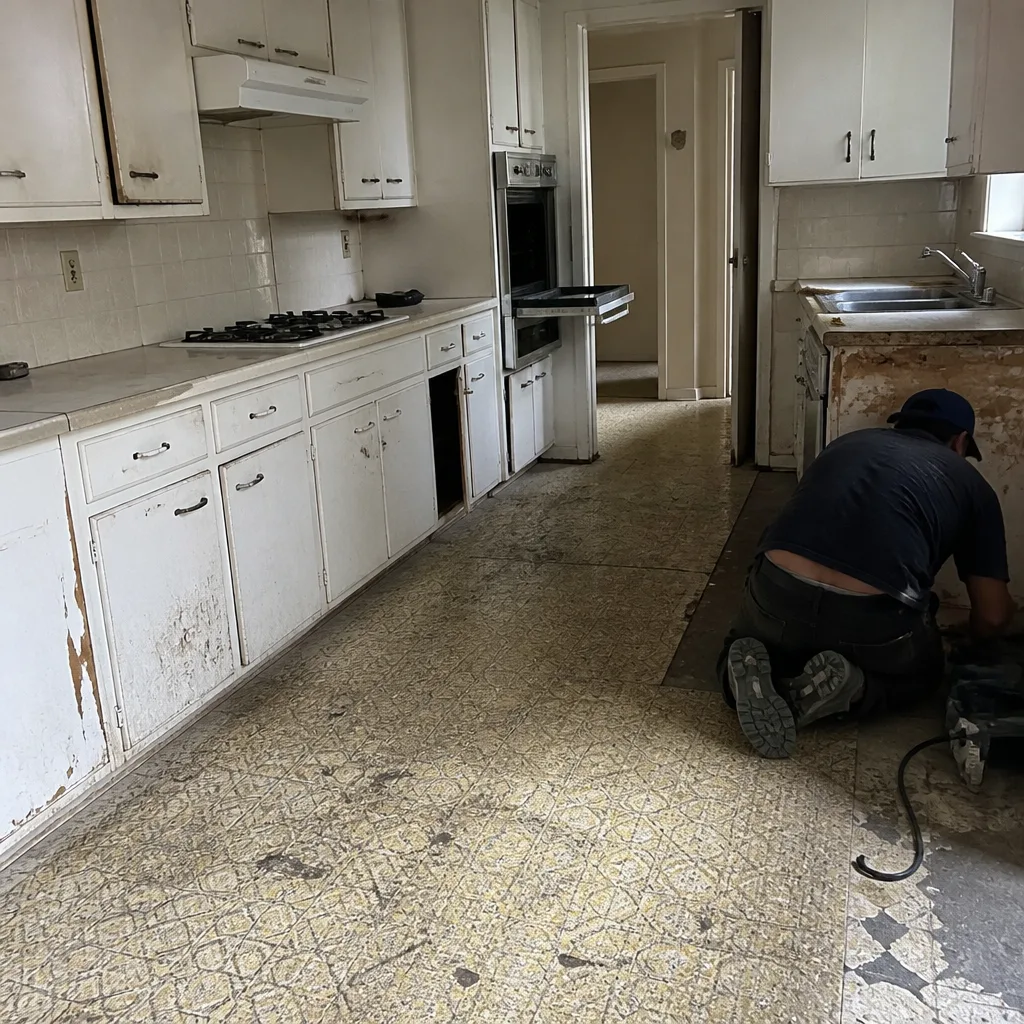 Before
 After
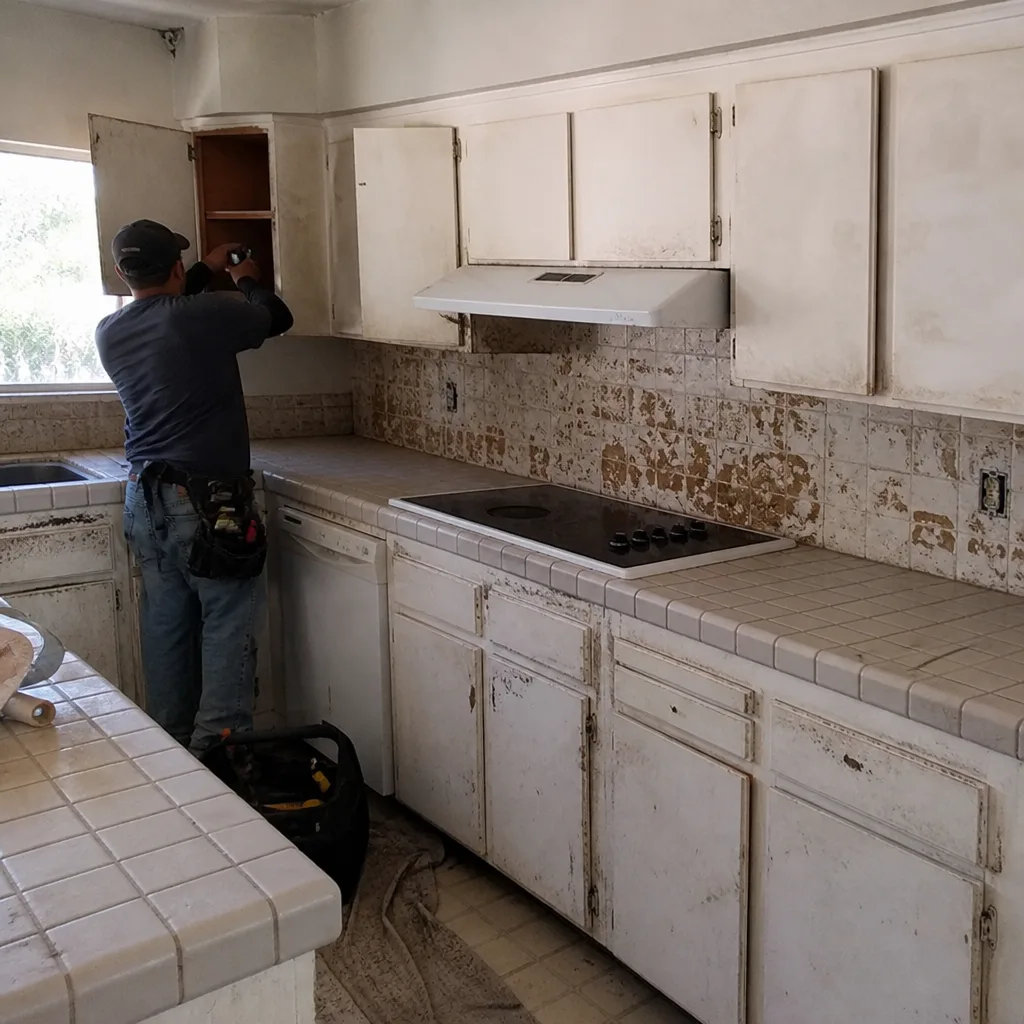 Before
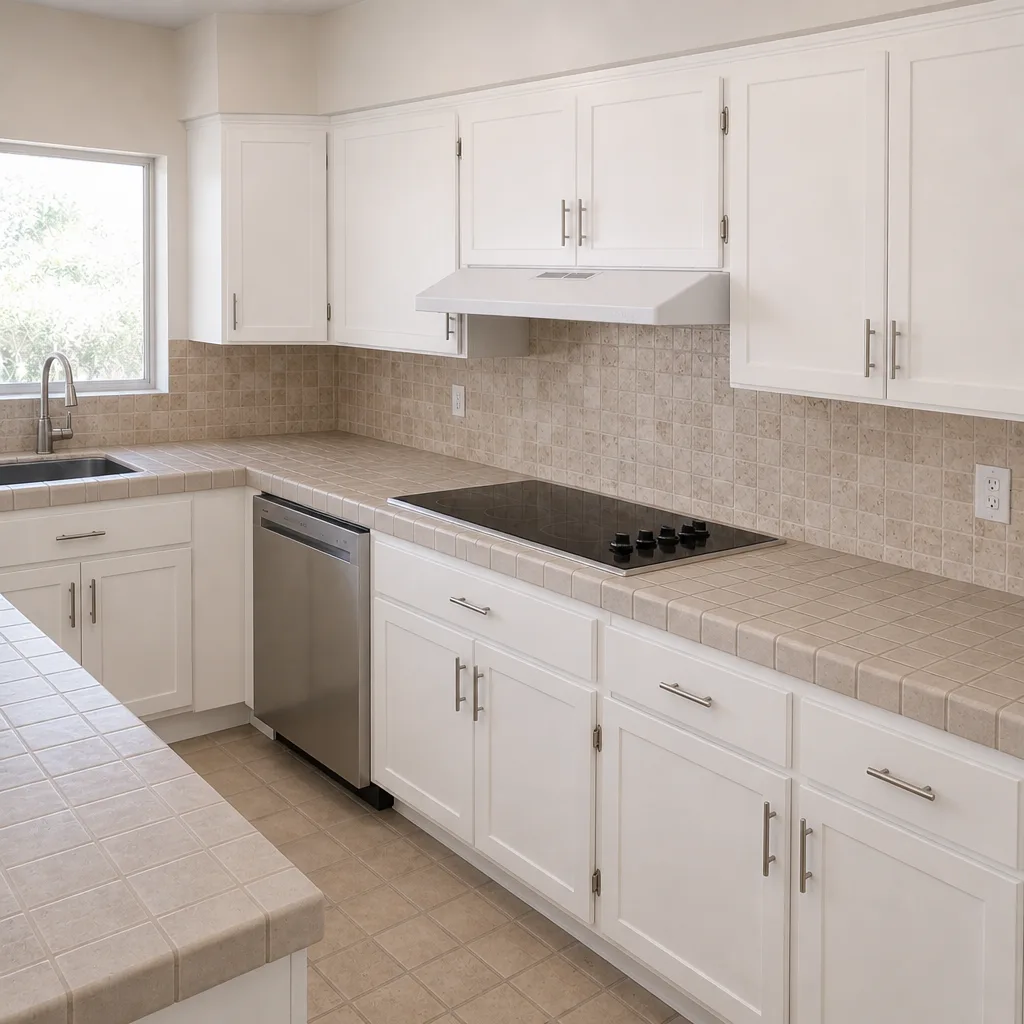 After
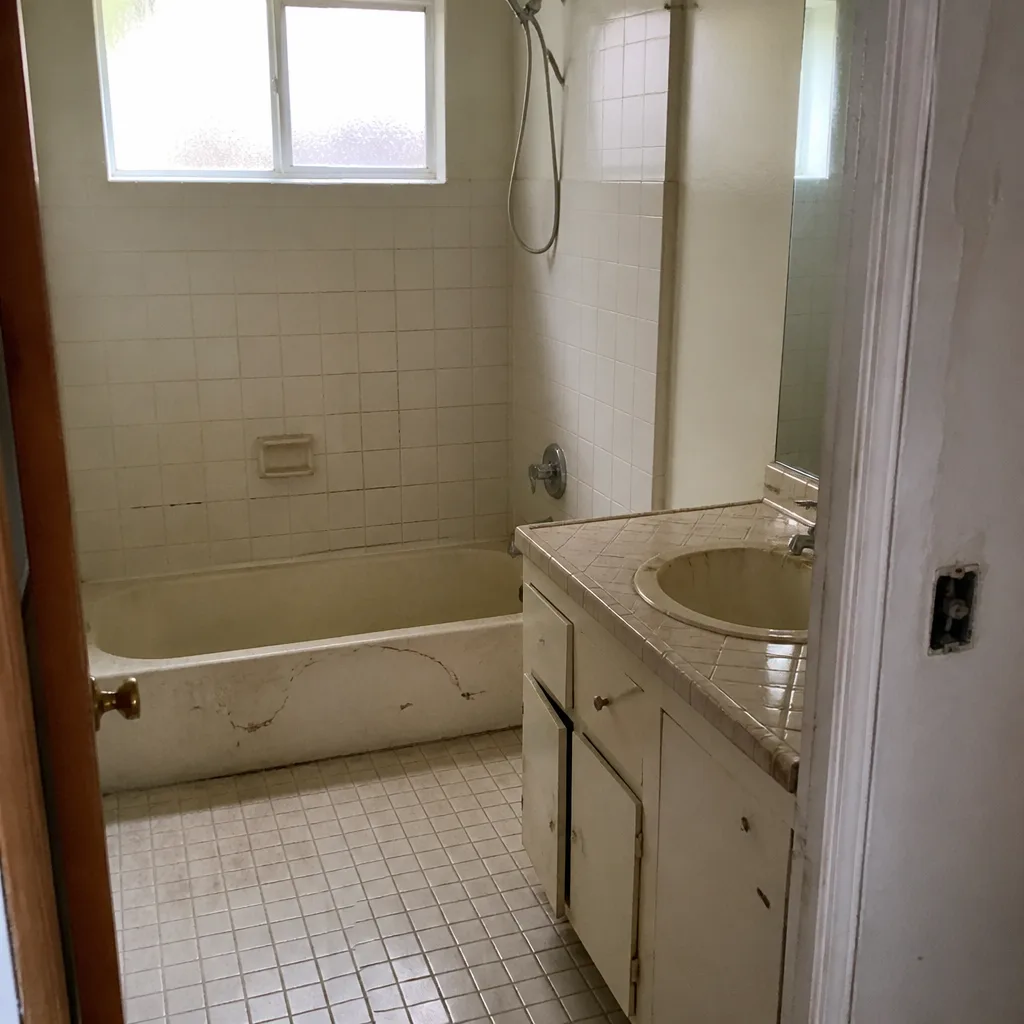 Before
 After
When to Call a Professional
Call a professional the moment any of these shows up: a shower floor that stays damp or dark in one area, a soft spot in flooring near the toilet or tub, white bloom on new grout that doesn’t wash away with normal cleaning, a mirror that stays fogged ten minutes after the shower’s over, or any stain on the ceiling below. Also call if your contractor goes quiet after final payment, or if you’re being pushed toward a change order you can’t fully understand. Any of these is enough. You don’t need to assemble a complete case before asking someone to look.
Groundwork Construction Co. of Irvine offers free estimates in Irvine. Call our team, walk us through what you’re seeing, and we’ll tell you whether it’s a quick fix or a rebuild. If the work involves pulling permits and opening a wall, our team handles the inspection process alongside the repair. When the time comes, we recommend reading up on the full scope of what we do so you know how a single contractor relationship can cover fixes, rebuilds, and future projects without a new bid every time. We also help Irvine homeowners with the rest of their property, from fence installation in Irvine to driveway and pavers in Irvine, and we set expectations up front so a small repair doesn’t grow into a full exterior project without your say-so.
Our bathroom remodels use brand partners like KraftMaid for cabinetry and Kohler for fixtures, so the shower rebuild you eventually do on a failed pan gets a proper waterproofing system behind it. We back every job with our 730-Day Done Right Promise, and the number you see in the estimate is the number you pay. Ready to stop guessing what that warning sign means? Call (888) 578-4462 to schedule your free estimate.
Frequently Asked Questions
A contractor who can’t produce a lien waiver on request is the single clearest pre-contract warning sign. If you paid in full and a subcontractor files a mechanics lien against your home because they weren’t paid, that’s a problem you inherit. Ask for conditional and unconditional lien waivers from the general contractor and every subcontractor before each payment. Call (888) 578-4462 for a free estimate and ask how lien documentation is handled on our projects.
Yes, whenever plumbing, electrical, or structural work is involved. Irvine requires permits and inspections for that work, and unpermitted remodels can stall a future sale or trigger a retroactive permit process that costs more than the original job. Ask your contractor for the permit number once work starts and who will meet the inspector. Call (888) 578-4462 if you want a straight answer on permits before you sign.
A legitimate change order shows photos of the discovered condition, itemizes labor and materials, and gets your written approval before work proceeds. Price manipulation looks different: the work gets done before you’re told, the price delta is vague, and it gets presented as unavoidable under time pressure. Ask your contractor up front what triggers a change order and whether you can say no. Call (888) 578-4462 to walk through change-order terms on your project.
White, powdery deposits on fresh grout are called efflorescence, and on a brand-new shower floor they usually mean moisture is moving through the tile assembly from behind. It’s one of the earliest signs of a failed shower pan or improperly installed waterproofing. Photograph the area, note the date it appeared, and notify your contractor in writing. Call (888) 578-4462 if the bloom doesn’t clear after a thorough cleaning.
Put your concern in writing with photos and dates, send it by certified mail, then file a complaint with the California Contractors State License Board if the contractor is licensed. Confirm their license status on the CSLB website first, and request your lien waivers to confirm no subcontractor has filed a lien against your property. Get an independent estimate for the corrective work so you have a documented cost. Call (888) 578-4462 if you want a second opinion on whether the issue is a quick fix or a rebuild.
A mirror that stays fogged for 10 minutes or more after a hot shower usually points to a ventilation problem, not just a foggy mirror. The exhaust fan may be undersized for the room, vented into the attic instead of outside, or never completed. Irvine’s tight building envelopes make this show up quickly. Have someone check the fan’s actual airflow and venting before it becomes a moisture problem in the walls. Call (888) 578-4462 for a free assessment.
The Bottom Line
Bathroom remodel failures are usually visible early if you know where to look. The warning signs split into three windows: what shows up before you sign (vague scope, low bids, “start Monday” pressure, no lien waivers), what shows up during construction (skipped waterproofing, unprotected rooms, no supervision), and what shows up in the first 90 days (efflorescence, soft subfloor near the toilet, fog that lingers). Catch any of them and you’ve saved yourself the cost of a full rebuild. Miss them and the fix usually lands on your dime, not the contractor’s, because most guarantees don’t survive a missed inspection. The right contractor makes all three windows easy to see. If you’re in Irvine and want a bid you can actually read, a permit you can actually verify, and a guarantee that holds for two years after the tape comes down, call Groundwork Construction Co. of Irvine at (888) 578-4462 or request your free project estimate and design consult. From foundation to finish line, built to last and backed in writing.
Written by the team at Groundwork Construction Co. of Irvine.