
5 Mistakes to Avoid With Driveway & Pavers
Four out of five driveway paver failures we’ve seen in Irvine trace back to decisions made in the first week of a project, not the installation itself. The compaction test that never got run. The subbase depth nobody wrote down. The HOA approval that came after the pallets were already on the driveway. We’re laying those mistakes out plainly, because most of them happen while you’re still trusting a contractor who benefits from you not asking.
If you’d rather hand the whole thing to people who do this for a living, call (888) 578-4462 – estimates are free.
Key Takeaways
- Skip the soil compaction test and you’ve guaranteed settling within a year or two, because Irvine soil changes block to block.
- Subbase depth belongs in the contract, not in a contractor’s head. For Southern California residential driveways it’s typically 4 to 6 inches of compacted Class II base over native soil.
- Confirm HOA approval before you buy a single paver. Installed work that gets rejected is expensive to tear out.
- No drainage plan means shifting pavers and failed joints. It’s the single most common Orange County paver problem we get called about.
- A materials-only warranty leaves you holding the labor bill. Read the labor terms before you sign.
1. Skipping the Soil Compaction Test Before Excavation
Irvine sits on some of the most variable soil in Orange County. You can dig into sandy decomposed granite in one part of Quail Hill and hit heavy clay in another, and the two behave completely differently under a loaded driveway. A soil compaction test tells you what you’re actually building on, and it costs a fraction of what redoing a settled driveway costs.
Here’s how the mistake happens. A crew shows up, excavates, and starts moving base material without ever checking the density of the native soil underneath. Everything looks fine on the surface. Then a year passes, the subgrade settles unevenly, and pavers start rocking near the garage apron or dropping where the family sedan parks every night.
A proper job includes a proctor test to establish the target compaction and field density testing to confirm the subgrade meets it before base material goes down. That’s not overkill in Irvine. It’s basic.
What to ask: “Will you run a compaction test on the subgrade before excavation, and will I see the results?” A contractor who waves that off is telling you something important about how the rest of the job will go.
2. Letting the Contractor Set Subbase Depth Without a Written Standard
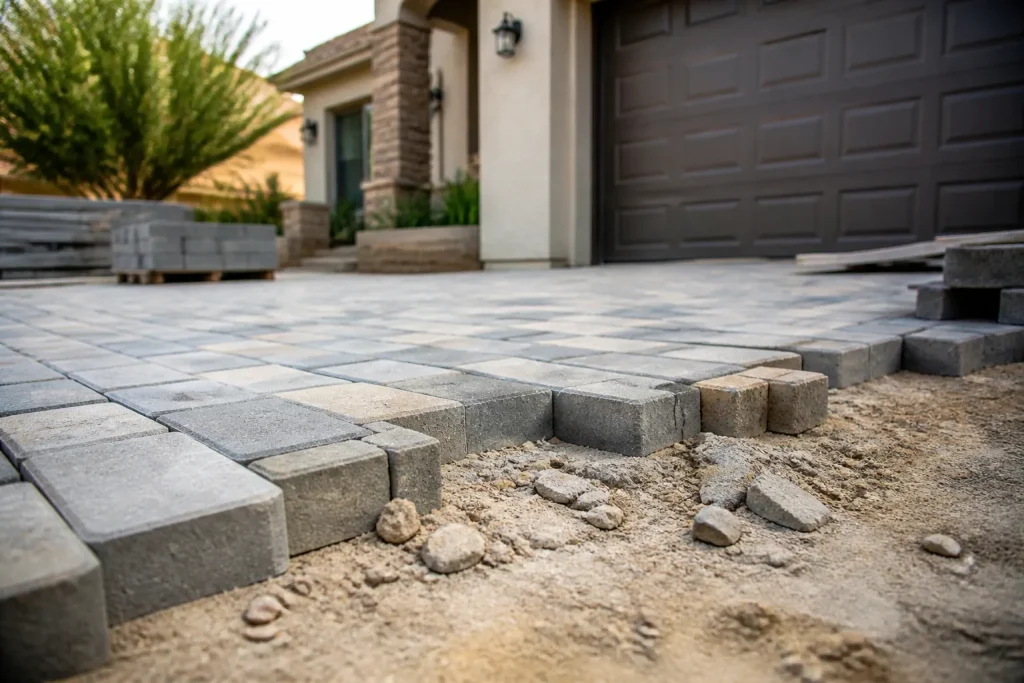
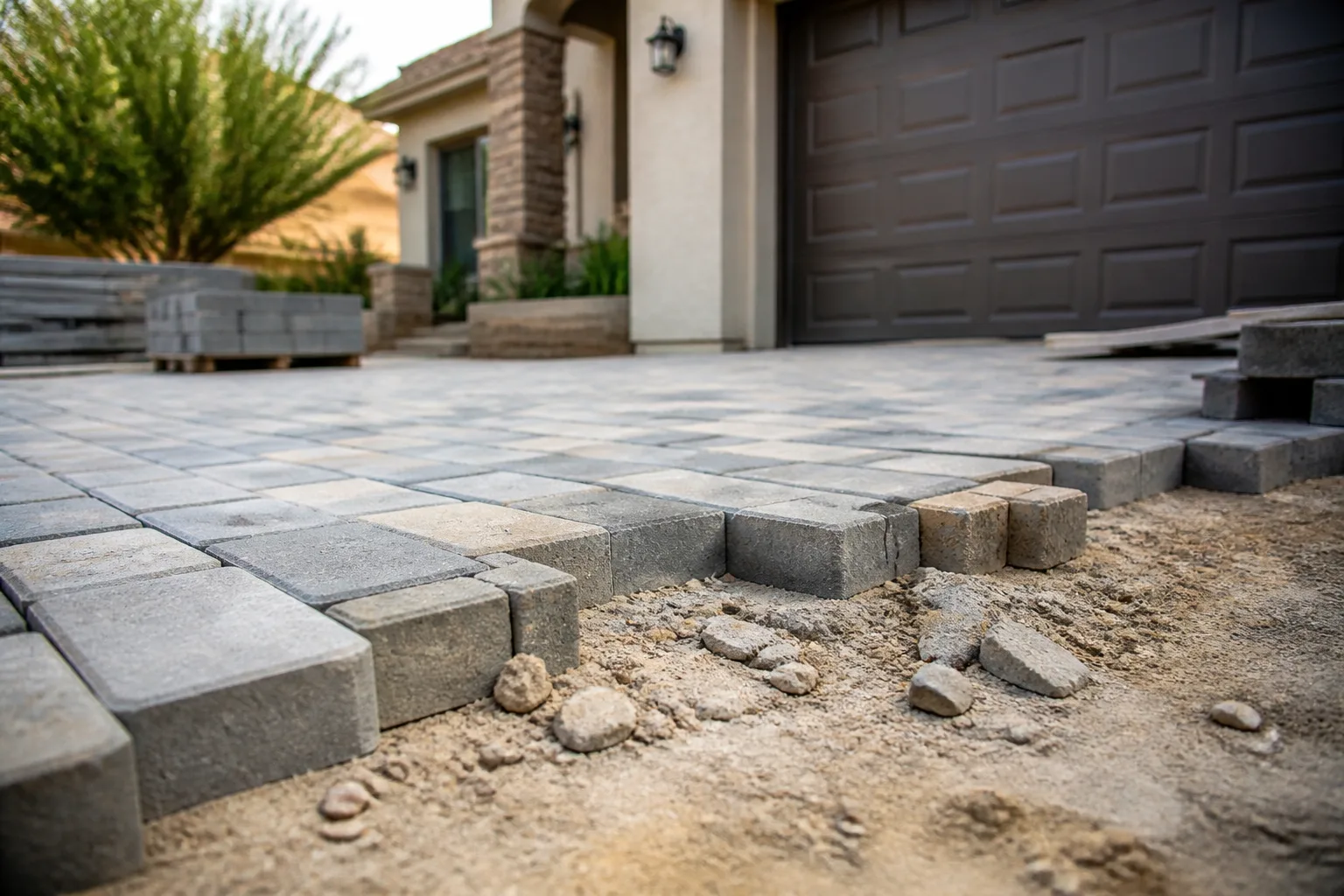
A paver driveway is only as good as what’s under it. The pavers are the visible 20%. The compacted base is the other 80%, and in Southern California residential driveways you’re typically looking at 4 to 6 inches of compacted Class II base over properly prepared native soil, installed in lifts and compacted between each one. Parking heavier vehicles or dealing with weaker subgrade pushes that depth toward the higher end.
The mistake isn’t that homeowners pick a bad number. It’s that they accept whatever depth the contractor decides on site without it appearing in writing. Thin the base and you save labor and material. Guess who benefits. A driveway built on 2 inches of base can look flawless at handoff and start flexing within a season.
We pulled an edge out of a driveway near Woodbridge last year where the base had been cut to about two inches to save a few yards of import. The pavers were premium Belgard. The base was an afterthought. It failed anyway.
- Get the base depth specified in writing, in the scope of work, not just discussed at the truck.
- Confirm Class II base or an equivalent engineered base material, compacted in lifts.
- Ask for the compaction method and how many passes with what equipment.
Bankate or edge restraint, joint sand, and a written spec for all of it. If it isn’t on paper, it isn’t part of the job.
3. Choosing Pavers Before Confirming HOA Approval
In Irvine, this one hurts the most, because by the time it surfaces the work is already done. HOAs here have architectural review requirements, and many of them specify acceptable paver styles, colors, and joint materials. You can pick a beautiful paver, pay for installation, and then get a notice because the color didn’t match the approved palette or the driveway width changed the drainage runoff.
What remediation actually costs depends on where you are. Sometimes it’s resealing or re-sanding. Sometimes it’s removing and replacing the entire apron with approved product. That bill lands on you, not the contractor, if the scope didn’t put HOA approval in their court.
Before you shop pavers, pull your HOA’s architectural guidelines and submit the plan. Get it in writing. Then order material.
A contractor who knows Irvine should ask about HOA approval in the first conversation, not after the deposit clears. If they don’t, that’s a red flag on how much of this project they’ve actually managed in this city.
Related services in Irvine: if your project includes a boundary upgrade alongside the driveway, our Fence Installation in Irvine page covers how we sequence shared-site work.
4. Signing a Contract Without a Defined Drainage Plan
Shifting pavers and failed joints across Orange County almost always come back to water that had nowhere to go. The pavement didn’t fail. The drainage failed, and the pavement took the blame. A paver driveway needs a plan that accounts for slope away from the structure, the finished grade toward the street or a drainage structure, and how the joints get filled and sealed.
Here’s what “defined” means. The contract should specify the finished slope (typically around 1% to 2% away from the garage), how water is directed at the apron and edges, and whether a channel drain or other structure is included. If your driveway slopes toward the house and nobody’s addressed it on paper, you have a drainage problem waiting for the first heavy rain.
This is the number one issue we’re called back to look at. Well-laid pavers over a poorly graded base still shift. The joints wash out, sand migrates, and one section starts sitting lower than the rest.
- Slope direction and percentage written into the scope.
- Joint sand type (polymeric or stabilized) and whether sealing is included.
- Edge restraint on the street side and against structures.
- How water leaves the site, not just how it leaves the driveway.
5. Accepting a Warranty That Covers Materials Only
Material warranties are the easy part. Manufacturers cover defective pavers. The hard part is the labor, and labor is where paver problems actually live. Settling, shifting, and joint failure are installation issues, and a warranty that excludes labor gives you a replacement pile of pavers and a bill for the crew to fix the base.
Acceptable language sounds like this: the workmanship is covered for a defined period, what’s covered is spelled out (base preparation, drainage, joint integrity), and the remedy is clearly stated – repair or replacement at no cost to you. If the warranty reads “materials only” or leaves out labor entirely, you’re the one carrying the risk.
This is where a written workmanship commitment matters more than the sales pitch. The Groundwork Construction Co. of Irvine home page lays out how our 730-Day Done Right Promise works – if it’s not done right, we make it right, for two years on workmanship.
Ask before signing: “What does the warranty cover, for how long, and who pays for labor if it fails?” If the answer gets vague, that’s your answer.
When to Call a Pro
Pavers are heavy, the base work is physical, and a driveway is a loaded surface that punishes shortcuts. If you’re looking at more than a small repair, or if you want the compaction, drainage, and warranty handled by people accountable for all three, this is a job worth handing off. On the material side, our technicians work with brands like Belgard for pavers and Master Halco for the fencing that often goes in alongside a driveway project – our technicians have up to 12 years of experience with all of it.
Related services in Irvine: if the driveway is part of a larger site project, our Home Additions & ADU in Irvine page shows how we sequence that work.
The Bottom Line
None of these five mistakes happen during installation. They happen in the planning and prep phase, and they’re all preventable with the right questions and the right paperwork. Compaction test, base depth in writing, HOA approval first, a defined drainage plan, and a warranty that actually covers labor. Get those five right and your driveway will outlast the truck that’s delivering the next batch of pavers.
If you’re in Irvine and want a contractor who answers the phone and puts the whole scope in writing before work starts, call (888) 578-4462 for a free estimate. Upfront pricing, no surprises – and if it’s not done right, we make it right for 730 days.
Frequently Asked Questions
For Southern California residential driveways, expect 4 to 6 inches of compacted Class II base over prepared native soil, installed in lifts. Heavier vehicles or weaker Irvine soil push that toward the higher end. Get the exact depth written into your scope of work.
Yes, in most Irvine HOAs. Architectural review typically covers paver style, color, joint material, and how the driveway affects drainage. Get written approval before ordering material – tearing out installed work that gets rejected costs far more than a review application.
Water and base preparation. Poor drainage slopes, missing edge restraint, or an inadequate or improperly compacted subbase cause pavers to shift, settle, and lose joint sand. It’s the most common paver problem we see across Irvine and the surrounding area.
Only if the contract says so. Materials-only warranties leave you paying for labor on any installation-related failure. Ask for written workmanship coverage that states what’s covered, for how long, and who covers the cost of repair.
Ready to Get It Right the First Time?
Our full service line covers the whole property – our team handles Driveway & Pavers in Irvine from subgrade to final joint sand, with upfront pricing and a 730-Day Done Right Promise behind every project. Call (888) 578-4462 to schedule your free estimate.
Written by the team at Groundwork Construction Co. of Irvine.
Need Construction Help?
Call Groundwork Construction Co. of Irvine - licensed & insured, here with fast after-hours help in Irvine.
(888) 578-4462