
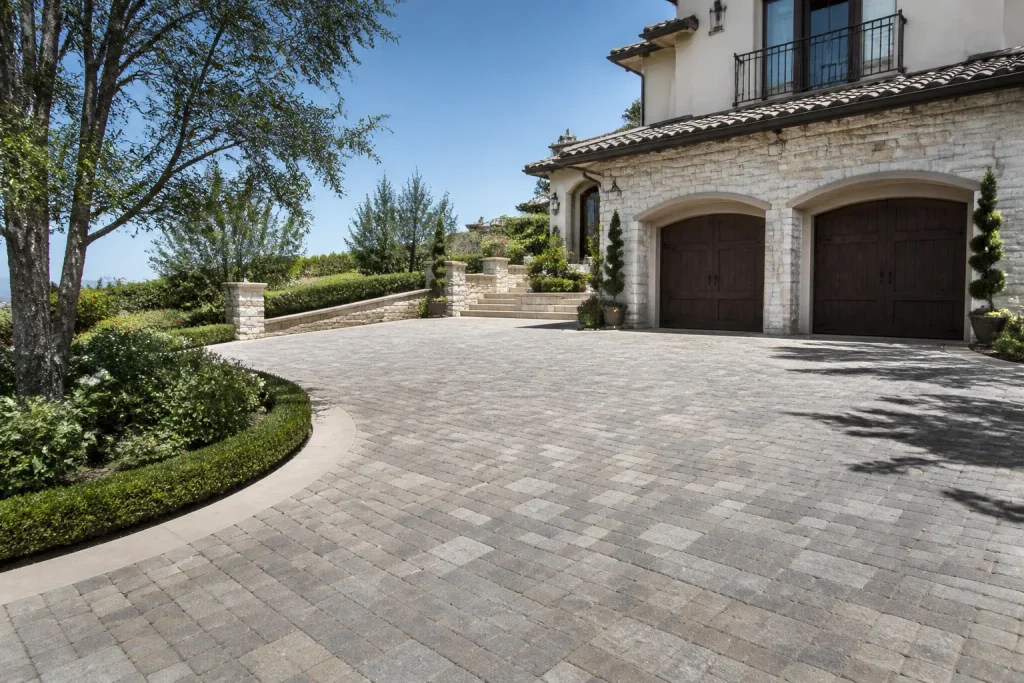
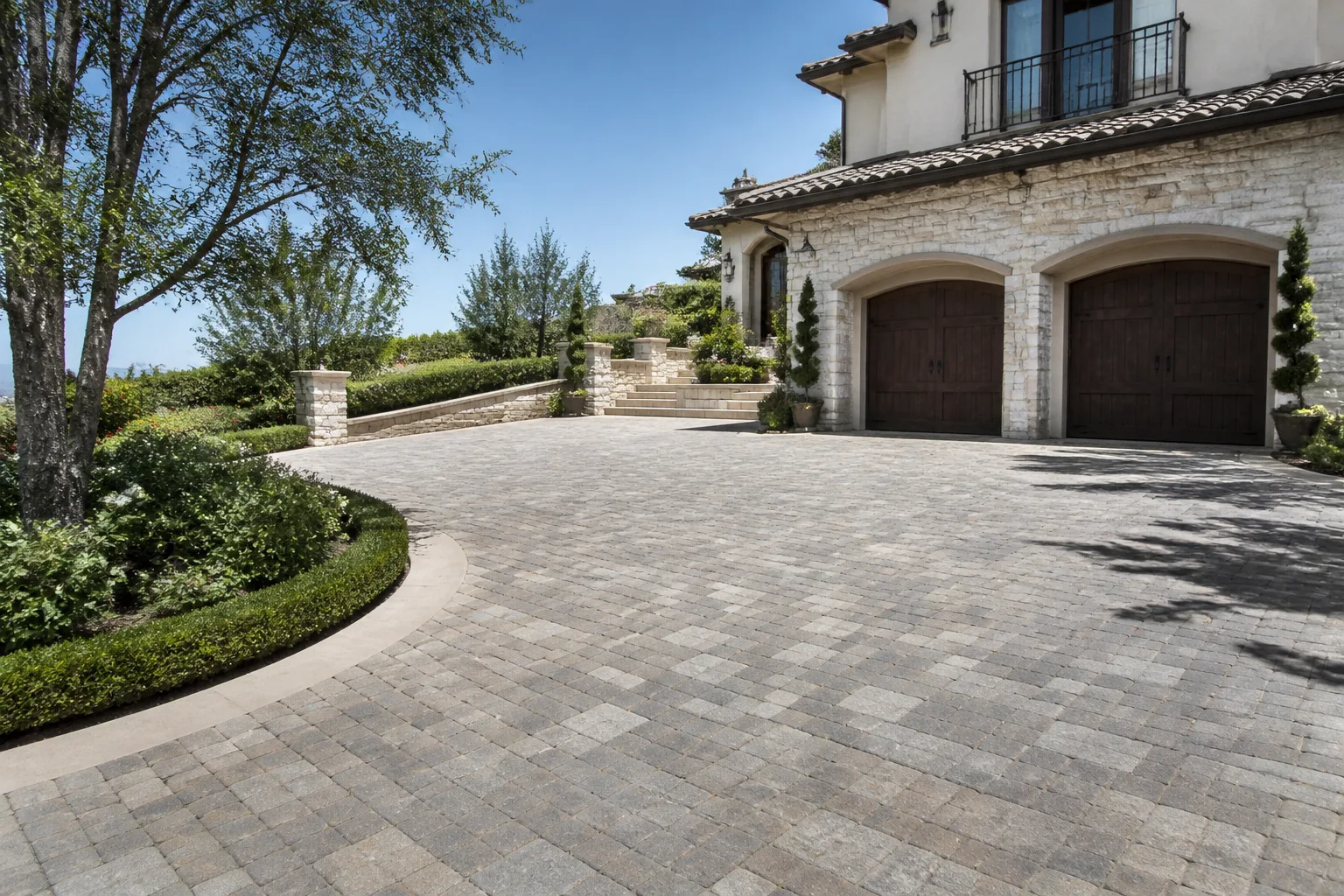
CWS Driveway & Pavers in Irvine: A Homeowner’s Guide
Most Irvine homeowners price pavers by the square foot and miss the three installation variables that decide whether that driveway lasts 8 years or 25. Square footage is the easy part. What actually determines lifespan in Irvine is base compaction, joint sand discipline, and whether the paver line you picked was rated for vehicle loads or only for patios. Get those wrong and you’ll pay twice.
CWS pavers, installed to spec on a properly compacted base, hold up better than most poured concrete in Irvine’s clay-heavy soil. This guide covers what to ask before you sign anything, and how to spot a bid that’s quietly cutting the base work to win on price. If you’d rather skip the guesswork, call (888) 578-4462 and we’ll walk you through it.
Why Irvine’s Soil Makes Paver Installation Different
Irvine sits on some of the most expansive clay in Orange County, and that clay moves. It swells when the winter rains come and shrinks through the dry summer months. Poured concrete slabs fight that movement directly, which is why you see hairline cracks spreading across driveways in Woodbridge and Northwood after a wet season. Pavers handle the same movement differently: each unit flexes independently, so the surface shifts a little instead of cracking.
That advantage only exists if the base was built for it. We’ve pulled up driveways in Irvine where the installer skipped proper subgrade prep entirely and laid bedding sand straight over native soil. Those fail fast, usually within a few seasons. The fix starts before a single paver goes down:
- Excavate deep enough. A driveway base needs roughly 6 to 8 inches of compacted aggregate over geotextile fabric, more where the subgrade is soft.
- Compact in lifts. Base material goes down in 2 to 3-inch layers, each one mechanically compacted before the next goes on. Dumping 8 inches at once and running a plate compactor over the top does almost nothing to the layer underneath.
- Verify compaction. A plate compactor alone doesn’t prove the base meets density. Ask whether your installer uses a jumping-jack or vibratory roller, and whether they check density at depth.
- Slope for drainage. Irvine gets most of its rain in a handful of winter storms. A driveway that ponds water at the garage apron will loosen joint sand and undermine the base over time.
In our experience, the base is where budget bids hide the difference. It’s invisible work, and it’s the first thing cut when a number comes in suspiciously low.
How CWS Paver Lines Differ, and Why Load Rating Matters
CWS makes pavers across several product families, and they are not interchangeable between a patio and a driveway. The specs that matter for Irvine driveways are compressive strength, water absorption rate, and thickness. A paver rated for foot traffic will crack under a loaded pickup or a contractor’s dump trailer, especially once the clay underneath starts moving.
What to look for on the spec sheet:
- Compressive strength. Driveway-grade pavers generally run well above the minimum for pedestrian applications. Ask for the number in writing, not a brochure claim.
- Water absorption. Lower absorption means better freeze-thaw and wet-dry performance. Irvine’s wet winters and dry summers stress pavers in both directions.
- Thickness. Thicker units resist point loads better, which matters on any driveway that sees heavy vehicles or a lot of turning traffic.
- Color fading warranty. Pigment quality varies by line. A paver that fades to a washed-out gray in three years looks worse than the concrete it replaced.
We specify CWS lines rated for vehicular traffic on every Irvine driveway, and pedestrian-rated units only where the paver never sees a tire. If a bid doesn’t specify the product line and rating, that’s a question worth asking before you sign.
Irvine HOA Approval: What to Know Before You Buy
Most Irvine neighborhoods sit under an HOA, and HOA architectural review is where good projects stall. The approval process is not the same across the city. A paver palette that’s approved in one village may get rejected a few miles away, and the review committee cares about more than color.
Here’s what Irvine HOAs commonly review on a driveway project:
- Material type and finish. Some associations allow pavers broadly; others restrict to certain textures or prohibit stamped patterns.
- Color palette. Many Irvine HOAs maintain an approved color list to keep streets visually consistent. Bring the actual paver sample, not a photo.
- Joint width and pattern. Narrow joints and certain running-bond patterns read as “concrete” to some committees; wider joints and varied patterns read as “paver.” Know which your HOA prefers.
- Driveway apron and edge treatment. Some associations have opinions about border courses and where the paver meets the sidewalk.
- Submittal timing. Architectural review can take weeks. Factor that into your install schedule, not after the pavers are ordered.
We’ve seen homeowners order material, sign a contract, and then discover the color wasn’t on their HOA’s approved list. Get written approval first. Every time.
Pavers vs. Stamped Concrete vs. Asphalt: The 20-Year Math
Upfront cost is the wrong comparison. The right comparison is total cost over 20 years, including maintenance, repair, and replacement. Here’s how the three options typically stack up for an Irvine driveway:
- Plain asphalt. Lowest install cost, highest upkeep. Asphalt needs sealcoating every few years and usually gets a full resurface or replacement within the 15 to 20-year window. Cracking and rutting are common on expansive clay.
- Stamped concrete. Middle install cost, but repairs are the problem. Once stamped concrete cracks (and it does, given Irvine’s soil movement), you can’t patch it invisibly. A section replacement never matches, and the decorative surface is bonded to the slab, so a crack compromises the finish too.
- CWS pavers. Higher install cost than the other two. But individual units lift and reset, so a settled or damaged section gets repaired in hours without touching the rest of the driveway. No sealcoating treadmill. No slab replacement. Over a 20-year horizon, that repair flexibility is what closes the cost gap and often overtakes it.
The one caveat: pavers only deliver that 20-year math when the base was built right. A poorly installed paver driveway fails worse than concrete, because the units shift and rut instead of just cracking. The base is the whole game.
What the 730-Day Done Right Promise Covers on Paver Work
Workmanship warranties are where the fine print matters, and paver installation is a good example. Our 730-Day Done Right Promise covers the installation itself: if it’s not done right, we make it right. Applied to pavers, that means the things a homeowner can’t easily fix themselves.
Specifically, on paver installation:
- Base and settlement defects. If the driveway ruts, sinks, or settles out of plane because the base wasn’t compacted correctly, that’s on us, not you.
- Joint sand and edge restraint failures. Sand washing out of joints or edge restraint that gives way are workmanship issues and covered.
- Installation-related unit failures. A paver that cracks due to improper bedding or load distribution gets addressed.
Paver defects from the manufacturer are handled through the manufacturer’s product warranty, and we’ll help you file it. And on any project over $10,000 you get $1,000 off, with 0% financing for 18 months available, so a full paver driveway doesn’t have to be an all-cash decision.
When to Call a Pro
Paver installation on a driveway is not a weekend DIY project. The base excavation, compaction equipment, and cutting required for a load-bearing surface are beyond what a homeowner can realistically do with rented tools, and the failure modes are expensive to undo. If your driveway is settling, your joints are washing out, or you’re starting from scratch and want it done right the first time, that’s the moment to call.
Related services in Irvine: if you’re already redoing the driveway, it’s a good time to look at Driveway & Pavers in Irvine and Fence Installation in Irvine, since the equipment and crew are already on site. For a larger property upgrade, see Home Additions & ADU in Irvine.
The Bottom Line
CWS pavers beat poured concrete on longevity and total cost in Irvine, but only when the base is built to spec, the product line is rated for vehicle loads, and the HOA signed off before the material arrived. Ask those three questions of any contractor, and you’ll know quickly who’s cutting corners. Groundwork Construction Co. of Irvine handles the base work, the material spec, and the HOA submittal so you’re not the one chasing it down, and every project is covered by the 730-Day Done Right Promise. If you’re in Irvine and need help, Groundwork Construction Co. of Irvine offers free estimates. Our technicians have up to 12 years of experience, all background-checked and uniformed. Call (888) 578-4462 to schedule yours, or start at the Groundwork Construction Co. of Irvine home page.
Frequently Asked Questions
Paver driveway installation in Irvine typically runs higher than stamped concrete or asphalt, and the exact number depends on square footage, base depth, product line, and any HOA requirements. The right way to price it is by total cost over 20 years, not the install number alone. Call (888) 578-4462 for an exact quote. Estimates are free.
Individual pavers can crack, but a properly installed paver driveway flexes with soil movement instead of cracking like a poured slab. The key is base compaction and correct subgrade prep. If the base is skipped or under-compacted, pavers will shift and rut regardless of brand.
In most Irvine neighborhoods, yes. HOA architectural review commonly covers material type, color palette, joint width, and pattern. Get written approval before ordering material or signing a contract, since approval timelines can run several weeks and requirements vary by village.
It covers workmanship: base and settlement defects, joint sand and edge restraint failures, and installation-related unit failures. Manufacturer defects are handled through the product warranty, and we help you file it. The promise holds for the full 730 days with no conditional fine print.
Written by the team at Groundwork Construction Co. of Irvine.
Need Construction Help?
Call Groundwork Construction Co. of Irvine - licensed & insured, here with fast after-hours help in Irvine.
(888) 578-4462