
Last updated November 17, 2026
 Windows & doors
 Kitchen remodeling
 Bathroom remodeling
 Home additions & ADU
 Roofing
 Driveway & pavers
 Fence
Free written scope consultation - allowances, timeline, and change-order rules on paper before a single trade is scheduled
Windows & Doors Troubleshooting: Common Problems and How to Fix Them
A door that won’t latch isn’t usually a door problem. In our experience, it’s frequently a foundation settling issue underneath it – and homeowners who replace the hardware three times before figuring that out spend real money chasing a symptom while the cause sits untouched a foot below their feet. Most window and door problems in Irvine share this trait: the visible failure points one layer up from the reason. This guide teaches you to trace the source, not just patch the surface. You’ll learn what’s genuinely a quick fix, what needs a trained eye, and what signs mean a scheduled repair is quietly turning into something bigger.
Quick Answer
Most window and door problems trace back to four root causes: house movement and settlement, moisture and humidity cycling, worn hardware and weatherstripping, or original installation mistakes. Fixing the symptom alone (re-caulking, replacing locks, adjusting hinges) buys time but doesn’t stop the return. Diagnosing the underlying cause first is what separates a permanent fix from a seasonal repeat visit – and in Irvine’s dry, warm climate, our biggest recurring culprits are thermal expansion, settlement, and dry-season wood shrinkage.
Styles & brands we work with
- Kitchen remodeling
- Bathroom remodeling
- Home additions & ADU
- Roofing
- Windows & doors
- Driveway & pavers
- Fence
Table of Contents
- Sticking Doors: Diagnosing Humidity vs. Hinge Failure vs. Structural Movement
- Condensation Between Double-Pane Glass: What It Means and Doesn’t Mean
- Draft Troubleshooting by Source: The Candle Test and What It Reveals
- Window Lock and Hardware Failures: Frame Shift vs. Mechanical Wear
- When Caulk-and-Seal Is a Legitimate Fix and When It’s a Cover-Up
- Irvine-Specific: Why Our Climate Creates Particular Window and Door Problems
- What You Can Diagnose Yourself vs. What Needs a Technician
- Repair or Replace? A Decision Framework
Sticking Doors: Diagnosing Humidity vs. Hinge Failure vs. Structural Movement
A sticking door is a symptom with at least three distinct root causes, and each has a completely different fix and price. Misdiagnosing it wastes hundreds. We’ve watched homeowners in Irvine’s older neighborhoods near the Irvine Ranch Historic Park replace door slabs three times because a settlement issue in the frame was never addressed. Before you touch the hardware, run this diagnostic.
Test 1: Seasonal swelling (humidity-related)
Wood doors absorb moisture and swell. If the sticking appears only during our wetter months (roughly December through March) and resolves in summer, it’s humidity-driven. Wood-frame doors in Irvine’s older homes consistently swell 1/16″ to 1/8″ in a wet winter, which is enough to rub a frame. Fix: light sanding of the strike-side edge with 120-grit, or a 1/16″ plane on the latch edge. Even a small adjustment (a fresh hinge screw set) is typically less than $50 in parts.
Test 2: Hinge failure (mechanical)
Check the three hinges on the door top, middle, and bottom. Open the door 45 degrees and gently rock it vertically. Any movement at the hinge side means wallowed screw holes or worn hinges. On older homes (1970s and earlier, common near Old Towne Tustin and central Irvine), hinge screws commonly strip after 40+ years. Fix: drill out and glue in a wood dowel plug, redrill, re-set the hinge. Two to three hours of a handyman’s time.
Test 3: Structural movement (settlement or frame distortion)
If the door sticks the same way in every season, the frame itself has shifted. Look for a consistent diagonal rub at the top corner (top-latch or top-hinge side). Check the door head trim for cracks in the caulk line. In slab foundations (which dominate Irvine construction), differential settlement is the usual culprit, and it usually comes with cracks above window and door heads. That’s a diagnostic pattern that needs a licensed professional to confirm – not a carpenter with a planer.
Which brings us to the doorway’s favorite diagnostic test: grab a 4-foot level. Place it on the door head and check the bubble. A flat head means a hardware issue. A skewed head (more than 1/8″ off across the width) means the frame isn’t square. That out-of-square frame is the reason your hardware keeps failing and, if settlement is the source, it deserves to be addressed at the slab level. If you’re already planning significant structural work, learning what’s involved in professional Home Additions & ADU in Irvine is a natural next step since foundations and framing overlap.
Condensation Between Double-Pane Glass: What It Means and Doesn’t Mean
Fogging between the panes of a double-pane window means one thing with certainty: the sealed unit’s edge seal has failed and moisture is inside the insulating glass unit (IGU). It does not mean the window frame is failing, the home is leaking air, or the wall is compromised. In our experience across Irvine homes, we regularly see this in west- and south-facing windows after about 8 to 12 years, and rarely a reason to replace the entire window.
What fogging actually tells you
- The IGU seal has failed – the perimeter seal that keeps argon or air trapped has broken down. The visible symptom is a hazy, cloudy, or dimpled interior between panes.
- Insulation value has dropped – an IGU that has lost its gas fill loses roughly 40 to 50% of its insulating value.
- Not a leak – the fog is internal, so it does not mean rain is entering the wall cavity.
What it doesn’t tell you
Fogging does not mean the frame is rotten, the weatherstripping is gone, or the whole window needs replacement. In dry Irvine summers, some homeowners mistake exterior dust haze on the glass for inter-pane fog – a glass-cleaner wipe outside to confirm is a 30-second test. Some fog also clears with temperature swings and returns, so check whether the clouding is continuous over a week or intermittent.
When replacement is actually necessary
- If fogging is present in 3 or more windows on the same wall, the whole orientation has failed – replacing the IGUs is usually the cost-effective path, not whole-window replacement.
- If the frame is soft, cracked, or has visible water staining on interior trim near the glass, replacement is legitimate.
- If the fog persists after a temperature/cooling cycle and the glass visibly distorts at the edge, replacement or IGU service is necessary.
IGU replacement typically costs a fraction of full window replacement – in our Irvine market, we’ve seen roughly $250 to $500 per IGU installed versus $700 to $1,500 for full window replacement. When you’re dealing with windows that fog in three places, consider what a full window package with brands like Andersen or Marvin would fit into your scope – and look at the trades checklist we use for Groundwork Construction Co. of Irvine home work to understand the estimation logic before you commit.
Draft Troubleshooting by Source: The Candle Test and What It Reveals
A draft at a window or door comes from exactly one of four places: weatherstripping, threshold, frame gap, or installation failure. You can actually identify which one with a candle or an incense stick held near the suspected seam on a still, cold morning. The flicker pattern tells you where the air is entering.
Step 1: Run the candle test
- Choose a still morning (no wind) or turn off the HVAC.
- Light a tea light or incense stick and hold it 1 to 2 inches from the seam you’re testing.
- Move slowly along the perimeter: top head, both sides, the sill, and the threshold.
- Watch the flame: a steady, horizontal bend means a real draft. A small flicker could be ambient air movement.
Step 2: Match where it flickers to the source
- Weatherstripping failure – flicker along the opening edge. You’ll see flat or torn weatherstripping; the seal has lost its spring. Fix: replace the weatherstripping (typically $30 to $100 in materials, one hour of labor).
- Threshold failure (doors) – flicker at the floor line and visible daylight under the door. Fix: adjustable threshold sweep; in many cases, the seal sweep can be replaced without removing the door.
- Frame gap (windows) – flicker at the interior trim or between the frame and the wall. The caulk bead has failed or the frame has shifted. Fix: re-caulk – unless there’s also evidence of frame movement, in which case the fix is deeper.
- Installation failure (doors and windows) – flicker uniformly around the whole frame with no obvious weatherstripping wear. The unit wasn’t shimmed or sealed properly at install. Newer homes in the Great Park and newer Irvine communities can have this; even a 2 to 4 year-old window can draft if the manufacturer didn’t flash the opening or if the rough opening was built off-square. This is not a weatherstripping fix – it’s a reset or replacement.
One more Irvine-specific note: our dry summers cause door and window frames to shrink in the opposite direction of our damp winters. If drafts appear in June and vanish in January, it’s normal seasonal movement. If drafts persist year-round, it’s a seal, alignment, or installation problem. Do not use expanding foam as a caulk substitute – it can bow frames and make the draft worse.
Window Lock and Hardware Failures: Frame Shift vs. Mechanical Wear
When a window lock won’t close or a handle feels “loose,” the diagnosis splits cleanly into two categories: mechanical wear of the lock itself, or the frame has shifted so the lock’s two halves no longer align. Given Irvine’s home mix – including a large share of 1990s and 2000s construction, plus a growing set of older homes near the Orange County line – both patterns show up. Here’s how to tell which one you’re dealing with.
The finger test for frame shift
Open the window, look at the sash-to-frame gap on the latch side and hinge side. Then close the window with the lock open and press firmly against the sash. If a visible gap opens on the latch side while the sash is seated, the frame is likely out of square. A straight-edge (a ruler or framing square) run along the sash edge will show the alignment. On a square frame, the sash sits flush all the way down. On a shifted frame, one corner touches and the other cuts away.
Mechanical wear vs. frame shift: what each looks like
- Mechanical wear: handle spins freely, the lock cam visibly wobbles, or the lock lever no longer catches the keeper on a properly aligned frame. Fix: replace the lock (a $20 to $60 part and 15 minutes).
- Frame shift: new lock still doesn’t catch, or the catch is “close but not enough.” No replacement lock will fix this. The frame needs re-alignment or renovation (which means window removal and reframing) – a professional scope, not a hardware swap.
- Worn weatherstripping plus lock wear: these often travel together. If the window rattles in the wind or the lock is stiff to close at 12 months old, inspect the weather seal before assuming the lock is bad.
A common Irvine version of this: vinyl sliding windows (popular in homes built through the 2000s) develop a latch that won’t catch because the vinyl frame has expanded unevenly in our hotter inland afternoons. The sun-facing side can grow 1/8″ over the cooler side by mid-afternoon. A slight latch adjustment is usually the fix; cast hardware does not respond to that – vinyl windows flex.
Remember: replacing locking hardware three times on the same window is a sign you’re addressing the symptom. If the lock fails on more than one window on the same wall, treat the frame as the cause first. For a full-coverage look at replacement options, the brands we work with (Andersen, Marvin, Pella among them) are a place to start – and if you’re also considering adjacent exterior work, the team’s approach to Fence Installation in Irvine reflects the same materials-first thinking.
When Caulk-and-Seal Is a Legitimate Fix and When It’s a Cover-Up
Caulk and sealant do real work – they protect the joints, block air movement, and shed water. But they solve a specific category of problem, and they’re routinely used as a cosmetic cover over problems that will return worse. In our experience, the single biggest window and door mistake in Irvine is caulking over a leak point or a frame gap instead of addressing the underlying source.
When caulk is the right fix
- Exterior perimeter joints where the original caulk has dried and cracked – this is caulk’s job; a proper exterior-grade caulk with a 20+ year life is a legitimate 2-hour maintenance task.
- Hairline cracks in stucco around a window or door head – provided the frame isn’t shifted. A good polyurethane sealant accommodates small movement.
- Small gaps at the trim-to-glass joint on the exterior – the standard sealant joint (typically 3/8″ to 1/2″ wide) that has aged out.
- Interior trim gaps that open seasonally – caulk plus a small flexible joint is a sensible maintenance choice.
When caulk is a cover-up
- Water staining above or below the window on interior walls – active water intrusion. Caulk over the exterior won’t stop it. The source is usually a failed flashing or a bad sill pan.
- Frame movement – caulking a moving joint will crack within weeks as the joint moves through the seasons. The frame needs attention first.
- Recurring wet spot or puddle at the base of a door – the threshold isn’t shedding water properly. Caulk won’t redirect; you need to fix the threshold pan.
- Rotting wood or soft trim – sealant over rot traps moisture. Cut it out and replace.
- Gap wider than about 3/4″ – a joint that wide needs a backer rod and a proper sealant, not a bead of caulk.
The rule: if the caulk is the only layer keeping water out, it will fail. If the underlying assembly is sound and the caulk is the outer weather layer, it’s a legitimate 5-year maintenance task. Use polyurethane or silicone on exterior joints, and always remove the old bead rather than caulking over it. Trades that build on a solid seal – like our Driveway & Pavers in Irvine projects, where joints and base prep decide longevity – follow the same principle of fixing the base, not the surface.
Irvine-Specific: Why Our Climate Creates Particular Window and Door Problems
Irvine has a dry-summer Mediterranean climate (Köppen classification Csa), which means a long, dry, warm season and a brief wet season. The practical effect is that Irvine homes undergo bigger annual humidity swings than homes in Santa Monica or San Diego, and our interior valley-facing neighborhoods (like Northwood and parts of Great Park) bake at higher afternoon temperatures. That combination puts sliding and wood-framed windows through real stress.
What actually happens to Irvine window and door components
- Wood door slabs swell through winter and shrink in summer. We regularly see the classic pattern: door sticks in January and February, then swings slightly loose in July and August. Homes with west-facing entries (like many in Quail Hill and Turtle Rock) see a wider swing because the afternoon sun heats the slab unevenly.
- Vinyl and aluminum frames expand and contract with daytime temperature more than wood, which shows up as sticking sliding windows during hot afternoons and hardened weatherstripping at year 10.
- Dry-season soil shrinkage in our clay-heavy inland soils can contribute to settlement movement, which then shows up as out-of-square door frames. This is one reason door and window symptoms can quietly indicate foundation movement in Irvine – and the first call is usually the one we’d make to a structural specialist.
- Santa Ana wind events (which reach Irvine a handful of times each fall and winter) put high pressure on the exterior weatherstripping, sills, and thresholds. Recurring drafts after the winds typically mean the exterior seal needs renewal.
We’ve also seen newer Great Park homes deal with installation-failure drafts because the housing was built fast and in high volume – the seals were the first thing compromised. Older Irvine neighborhoods deal with the seasonal-swelling problem – the wood is dry and has been cycling for decades. The fix is different in each case; the diagnostic has to tell you which one you’re in before a dollar gets spent.
What You Can Diagnose Yourself vs. What Needs a Technician
Homeowners can safely diagnose most window and door problems. The tests don’t require trade tools and cost nothing but time. What changes the game is what you do with the diagnosis. Here’s what’s safe to tackle yourself and what we’d hand to a trained technician.
Safe to diagnose and often fix yourself
- Candle/incense draft test – safe, cheap, tells you exactly where to focus.
- Level check on the door head – catches out-of-square door frames in 2 minutes.
- Weatherstripping inspection – look for flat, torn or missing strips.
- Visual rot and moisture check – probe trim with a screwdriver. If it dents easily, it’s suspect.
- Replace weatherstripping, sweep seals, or a lock on a square-aligned frame – legitimate homeowner-level fixes when the frame is confirmed sound.
- Re-caulk exterior perimeter seams – good maintenance on sound assemblies, and within homeowner skill for most.
Let a trained professional handle these
- Any glass replacement – tempered and low-E glass handling is a professional job, and tempered units shatter wholly if mishandled.
- Any opening-wall or frame-level structural work – removing a door or window frame for repair affects the rough opening, header and flashing; do not attempt this yourself.
- Roof-line or high-height window repair – ladder work at height is a major injury risk. Call a professional.
- All electrical work at door hardware – electronic locks, keypads, doorbell camera wiring all fall into the licensed-electrician category. Never guess at a wire.
- Any frame that the candle or level test suggests has moved – a professional determines whether it’s weather, install, or settlement, without guessing.
Groundwork Construction Co. of Irvine uses background-checked, uniformed technicians on every job, and our technicians have up to 12 years of experience. That’s not a badge we lean on – it’s a check so the diagnosis you receive is reliable the first time. And if the frame does need structural help, we don’t work blind; the same crew that handles our windows and doors also handles the load-path questions.
Repair or Replace? A Decision Framework
Here’s the framework we use on Irvine jobs, and it’s the one we’d want if we were the homeowners.
The 3-question test
- Is the frame sound? If the wood or vinyl frame dents, cracks, or feels loose, it’s replacement. If the frame is sound but the glass is fogged, IGU replacement is the fix (typically a fraction of the window cost).
- Is this one window or a pattern? One fogged window or one sticky door: repair. Three windows fogging on the same wall, or every door in the house sticking: replacement or root-cause fix is worth examining.
- How old is the unit? Windows and doors from the 1990s have likely hit the end of the IGU seal life; both the IGU and the weatherstripping will be at the end of their useful period around 15 years. Repair the seal once; if it goes again inside a couple of years, replace.
Repair it when:
- The frame is straight, level, and dry, and one component (weatherstripping, lock, sweep) has failed. That’s a repair every time.
- The glass is fogged but the frame is clean and aligned. IGU replacement is roughly 40% of a full-window swap.
- The door only sticks seasonally. Adjust, don’t replace.
Replace it when:
- The frame is out of square or rotted – replacements are as strong as the rough opening allows, and sealing a warped frame wastes money.
- Multiple windows or doors show the same symptom across an entire wall – you’re likely looking at a group failure caused by the same installation detail.
- You’re remodeling the surrounding room anyway. In our experience, integrating window replacement into a broader scope avoids duplicated tear-out and trim work. Andersen and Marvin are the two most common window platforms we spec because they offer the right balance of frame style and warranty.
Common Mistakes to Avoid
- Caulking over water staining instead of finding the flashing or pan failure. Irvine’s occasional heavy winter storms expose it, and the interior wall pays the price when the stain is painted over. Always trace the water path one layer deeper.
- Replacing hinges three times on a door that was never square. This is the $600 story that opens this guide. The hinge is not the problem; the frame is.
- Assuming fogged glass means a new window. In 5 out of 6 cases we see in Irvine, the IGU needs replacing, not the whole window. Ask your technician to quote IGU service first.
- Using expanding foam as a caulk substitute around a moving frame. It flexes in the frame structure and bows frames, making the draft worse. Correct product, correct gap, correct technique.
- Only testing for drafts when it’s hot. Cooling HVAC air movement can mask a real draft source. Run the candle test on a still event.
- Ignoring a door issue that shows up after a hot afternoon. In Irvine, a stuck sliding door at 4 p.m. on a July afternoon can be vinyl expansion. Test again at 8 a.m. – if the door operates freely, it’s thermal movement, not frame damage.
- Filing a warranty claim for a “properly installed” window without checking the rough opening and flashing. Most “installation-failure” window leaks are aged flashing, not the window itself – document it before calling.
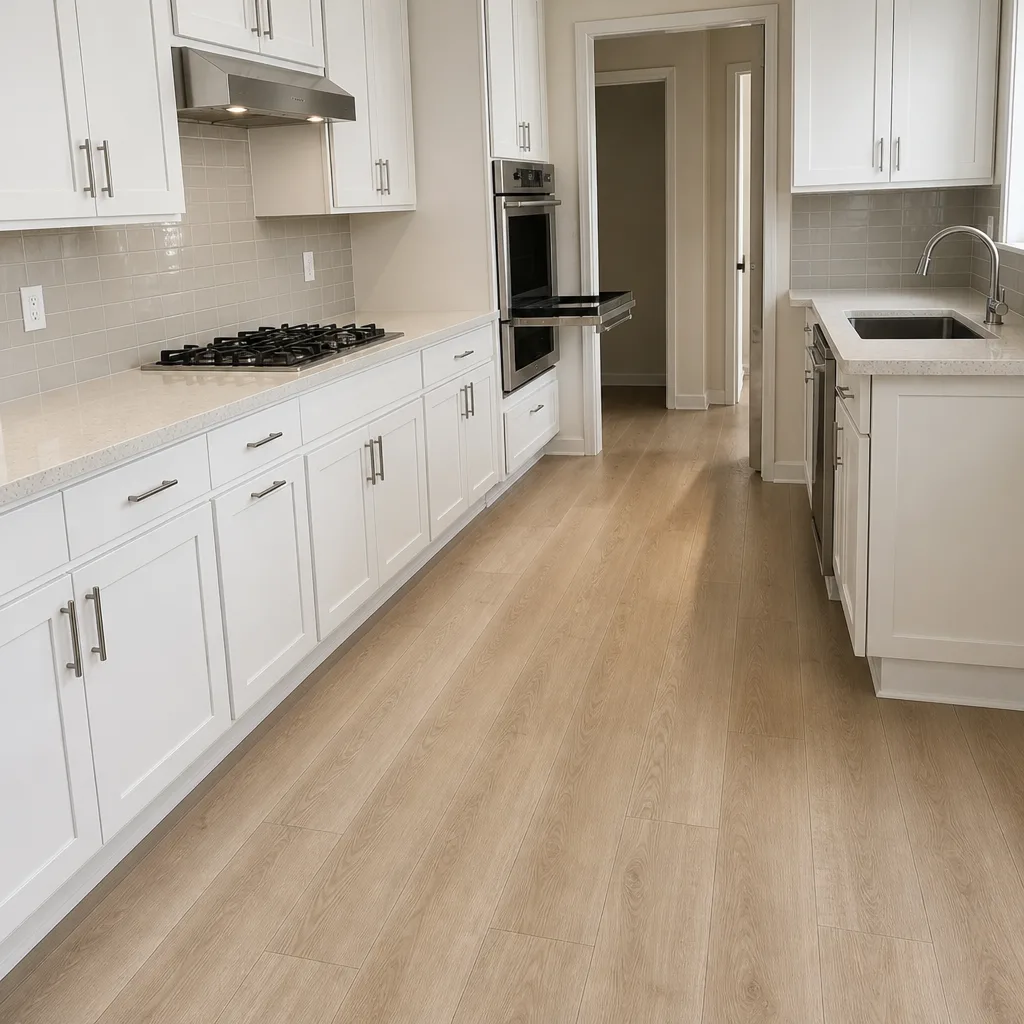
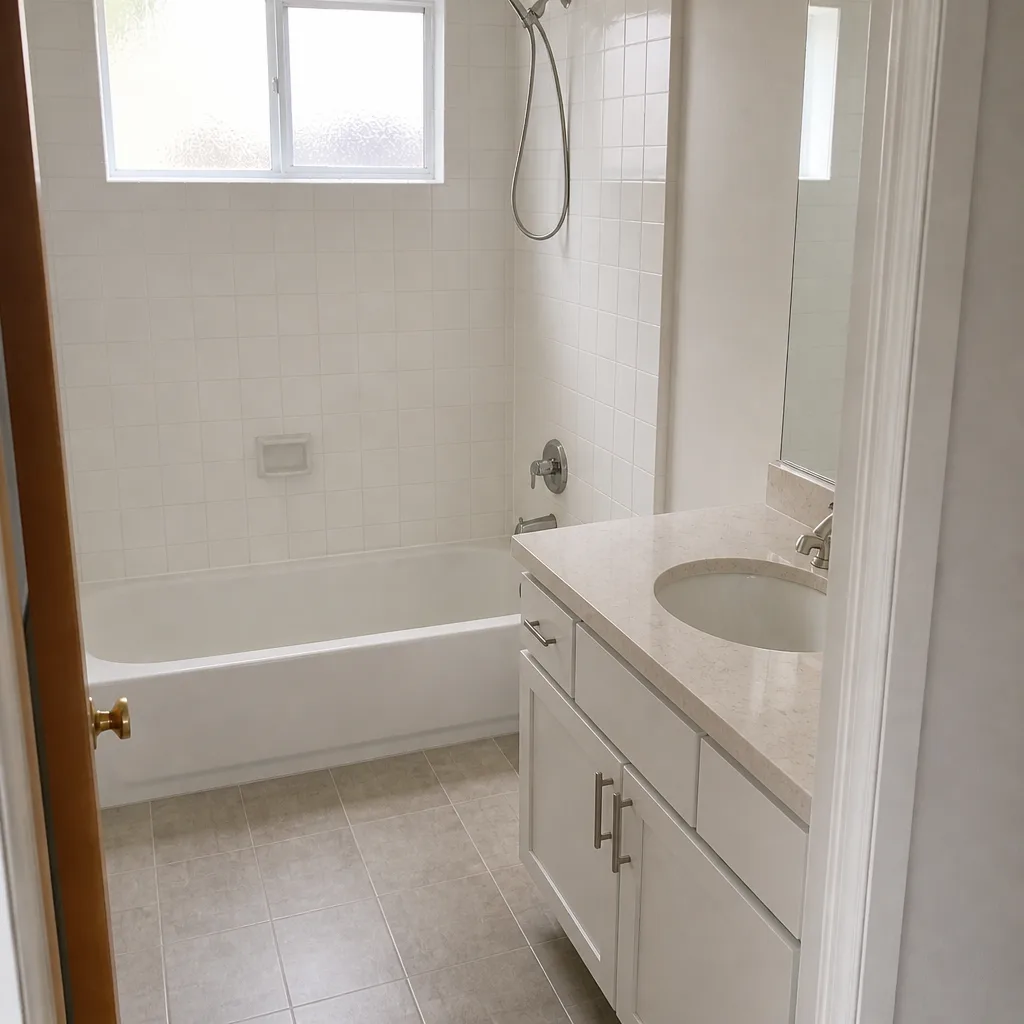
See the difference
 Before
 After
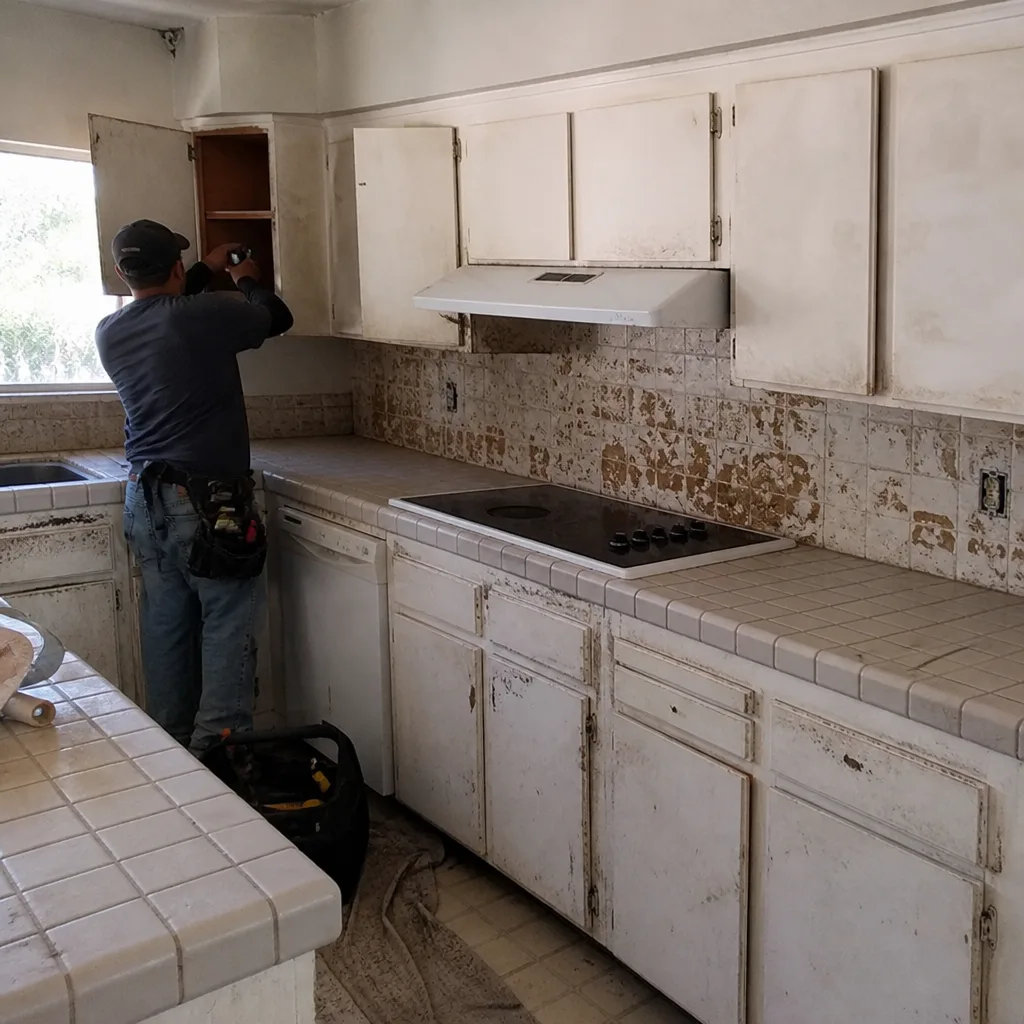 Before
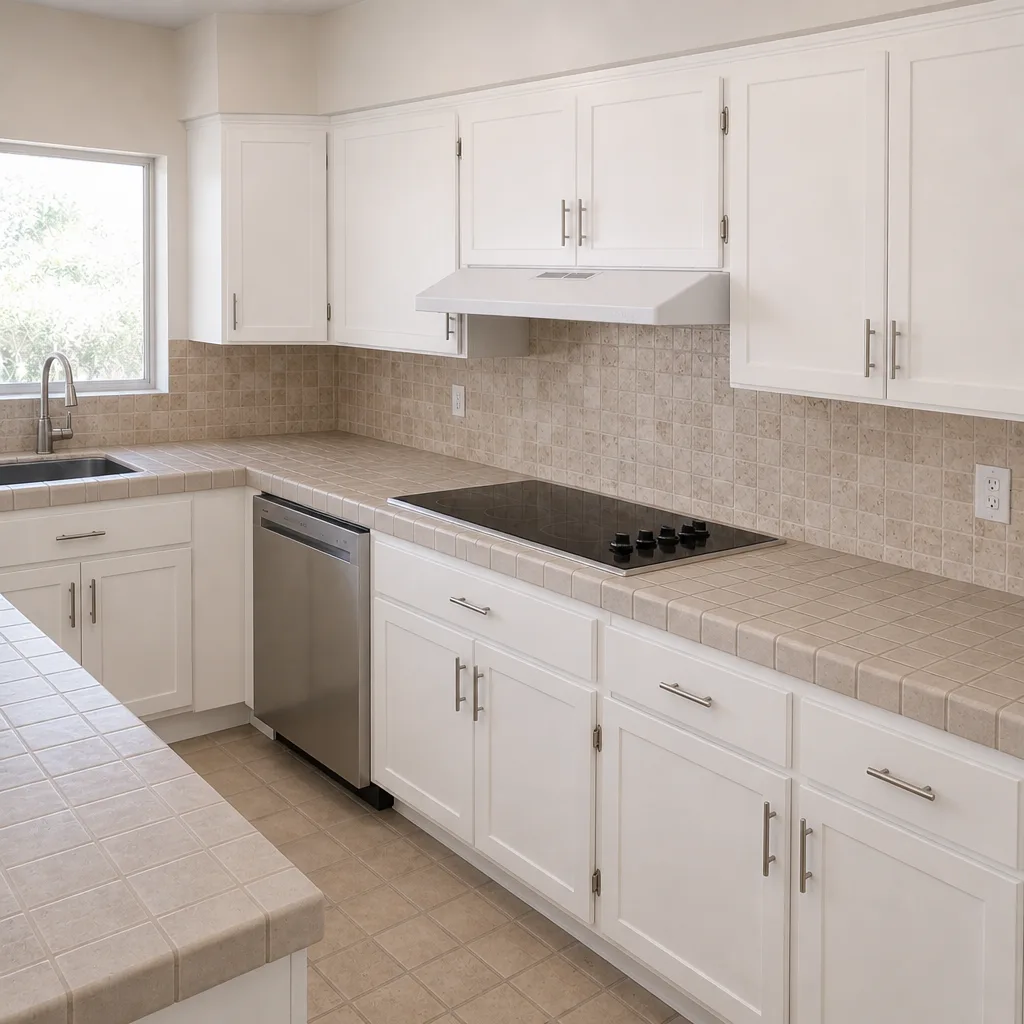 After
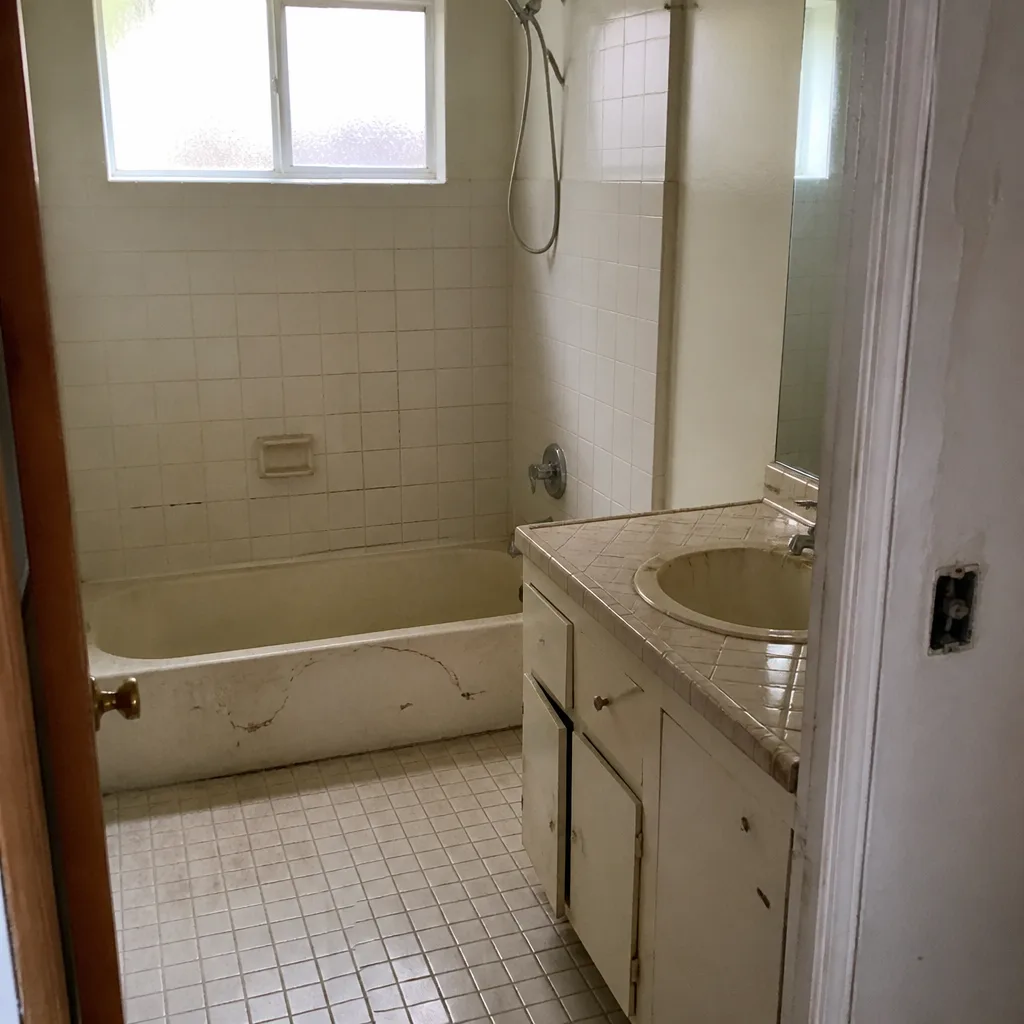 Before
 After
When to Call a Professional
Call a trained professional when the candle test or level test reveals a frame that has shifted, when water staining shows up above or below a window, when a door won’t latch even after hardware adjustment, when glass needs replacement, or when the work involves height or electrical components. Those are the scenarios where guessing gets expensive. Three of them overlap with foundation or framing questions that a window technician alone can’t resolve. At that point, the right call is a licensed company that can assess the full picture – structural, envelope, and trim – and one of our technicians can confirm the source before you commit to anything.
Groundwork Construction Co. of Irvine offers free estimates in Irvine, with background-checked, uniformed technicians and upfront pricing on every quote. Call (888) 578-4462 and we’ll walk you through it. No surprises, no change orders, no chasing a symptom twice.
Frequently Asked Questions
Fogging between the panes means the sealed edge of the double-pane glass unit (IGU) has failed and moisture has entered the gas gap. It does not mean the window frame has failed or that rain is leaking into your wall. The fix is usually IGU replacement, not whole-window replacement – and in Irvine homes, that’s typically about 40% of the cost of a full window swap. Call (888) 578-4462 for a free estimate, and we’ll confirm whether the frame is sound first.
Winter sticking is almost always humidity swelling in the wood door or frame, which resolves naturally as the wood dries in summer. In Irvine, this is a common pattern on west- and south-facing doors where the slab absorbs moisture from the wet season and then dries out through late spring. Light sanding of the latch edge (1/16″ to 1/8″) is the normal fix. If it sticks year-round regardless of season, that’s a frame or settlement issue, and it needs a technician.
Yes, if the draft source is confirmed as weatherstripping – meaning your candle test showed flicker along the door’s opening edge and the frame itself is square and sound. Weatherstripping is a homeowner-level fix. But if the draft enters at the frame gap or the door threshold is rotted, new weatherstripping won’t seal it. Run the candle test first, then decide.
Not more, but different ones. Irvine’s dry-summer climate creates a bigger annual humidity swing than coastal Orange County, which means wood doors and frames move more through the seasons. Vinyl and aluminum frames expand more in our hot inland afternoons. Our clay-heavy inland soils contribute to the settlement movement that shows up as door and window frame issues. So while San Diego might have fewer seasonal door swell problems, Irvine sees more of them – and more frame-shift symptoms tied to soil movement.
Try a simple test: press the closed sash firmly against the frame and watch the latch side with the lock open. If a visible gap opens on the latch side, the frame is likely out of square – replacement locks won’t fix it. If the lever spins freely with no gap and the frame is square, the lock is simply worn. New hardware resolves that in 15 minutes. When the test points to the frame, call (888) 578-4462 to schedule a free assessment.
Yes, in our experience. Window and door replacements are one of the few home improvements that typically return most of their cost on resale, according to cost-versus-value data tracked by the industry’s remodeling indextools. In the Irvine market specifically, where homes sit in the $80K to $200K household income tier and buyers are renovation-savvy, a recent window and door replacement package with brands like Andersen or Marvin is a real negotiating point. Repairs to a minor seal issue rarely move the dial; full replacements do. Schedule a free estimate before committing – call (888) 578-4462.
The Bottom Line
Windows and doors fail in four predictable ways: movement, moisture, wear, and installation. The visible symptom – the sticking door, the fogged glass, the wobbly lock, the draft – is almost never the actual source. Diagnose with the candle and level tests, determine whether the frame has moved, and rule out the cheap mechanical fixes before stepping up to anything expensive. Repairing the source is what lasts in Irvine’s climate; patching the symptom only buys a season or a year. Our team writes the whole job into a fixed price before work starts, and every project carries our 730-Day Done Right Promise – if it’s not done right, we make it right. Call (888) 578-4462 for a free estimate and let’s trace the problem together.
Written by the team at Groundwork Construction Co. of Irvine.