
Last updated November 17, 2026
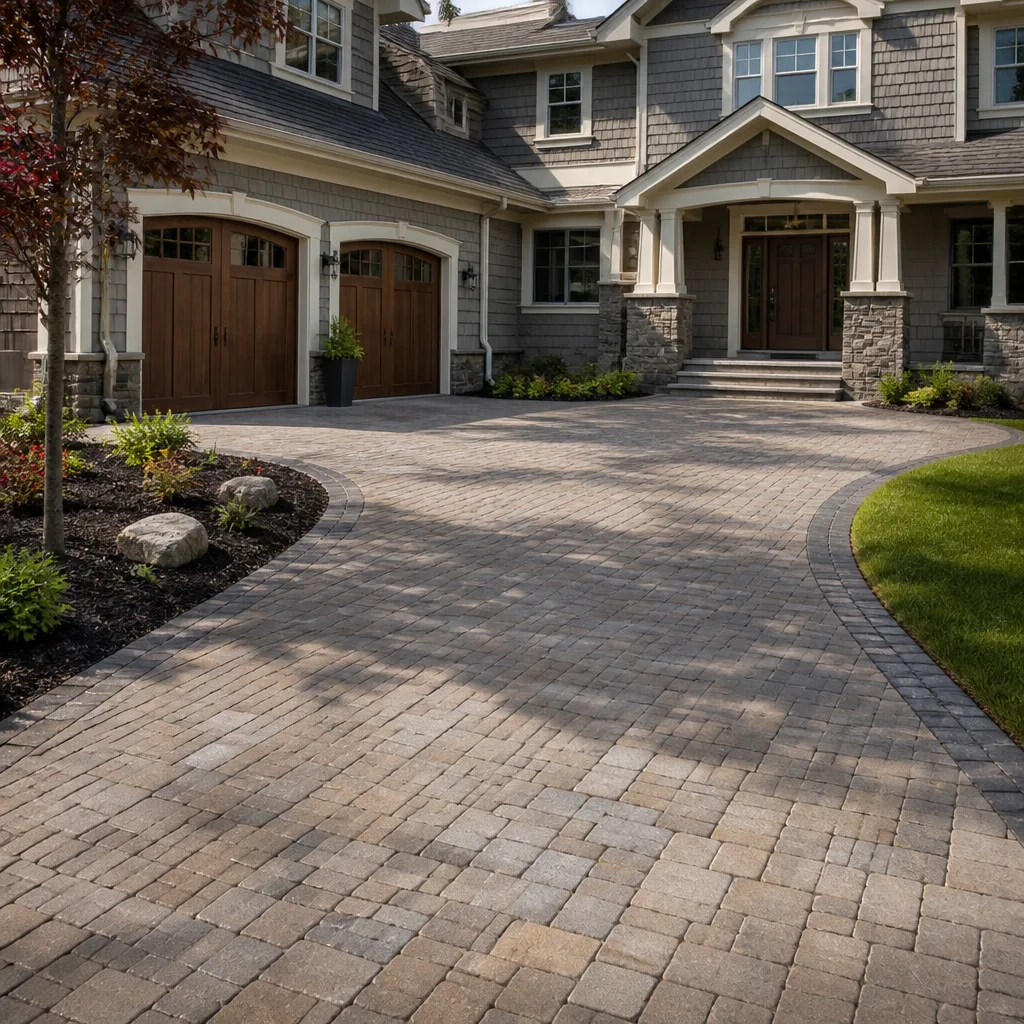 Driveway & pavers
 Kitchen remodeling
 Bathroom remodeling
 Home additions & ADU
 Roofing
 Windows & doors
 Fence
Free written scope consultation - allowances, timeline, and change-order rules on paper before a single trade is scheduled
Driveway & Pavers Warning Signs Every Homeowner Should Know
A single rocking paver in an otherwise stable driveway is not a minor annoyance. In our experience across Irvine, it’s frequently the first visible indicator of a base failure that is already spreading laterally beneath the surface, often long before the homeowner notices the dip at the garage apron. Most of the expensive driveway replacements we’ve scoped began with a warning sign that sat unread for a year or more. This guide teaches pattern recognition: the ten-minute visual tests, the edge-separation signatures, the water-pooling diagnostics, and the staining patterns that separate cosmetic wear from structural failure, plus how to document everything so you are protected under a warranty.
Styles & brands we work with
- Kitchen remodeling
- Bathroom remodeling
- Home additions & ADU
- Roofing
- Windows & doors
- Driveway & pavers
- Fence
Quick Answer
The core warning signs of a failing paver driveway are: pavers that rock when you step on them, poly sand washing out of the joints, edge course settling or separating from the field, standing water that lingers more than 24 hours after rain, and dark or white staining that spreads rather than fades. Any one of these on its own is worth documenting; two or more appearing together usually signals base movement that is cheaper to catch now than to replace later.
Table of Contents
- Why Warning Signs Show Up 12 to 18 Months Early
- The 10-Minute Visual Test Any Homeowner Can Run
- Cosmetic Wear vs. Structural Failure: How to Tell Them Apart
- What Edge Separation Patterns Reveal
- Reading Water Pooling as a Diagnostic Tool
- Color Variation vs. Staining That Signals Moisture
- How to Document and Timestamp Warning Signs
- Irvine’s Climate and Soil: Why These Signs Show Up Here
- Common Mistakes to Avoid
- When to Call a Professional
- Frequently Asked Questions
- The Bottom Line
Why Warning Signs Show Up 12 to 18 Months Early
Paver systems fail from the bottom up. The surface you walk on is the last thing to go, which is why the visible symptoms arrive so much later than the actual problem. Underneath your pavers sit three layers: the bedding sand, the crushed aggregate base, and the compacted subgrade. When any one of those layers loses compaction or gains moisture, the pavers above begin to move in fractions of an inch. That movement is almost invisible day to day. Over 12 to 18 months, though, it translates into rocking, joint separation, and the pooling you eventually notice.
This delay is the whole reason this guide exists. A homeowner who catches the pattern in month three might be looking at re-sanding and a localized base repair. The same homeowner in month 20 is often looking at full replacement, because the movement has crept under the field and destabilized pavers that looked fine the year before.
The surface clues break into four families, and learning to read them together is what separates a cheap fix from a five-figure one:
- Movement clues – rocking pavers, joint sand loss, pavers that sit proud or sunken in patches.
- Edge clues – course separation, restraint failure, soil creeping over the border.
- Water clues – pooling locations, damp areas that never dry, efflorescence after rain.
- Color clues – staining that spreads versus the slow, even weathering every paver shows.
When we scope a driveway project here for Driveway & Pavers in Irvine, we walk the whole surface looking for these four families of clues, not just the complaint that brought the homeowner to call. The clues rarely travel alone. A rocking paver near the street usually has a partner sign at the edge or in the drainage line.
The 10-Minute Visual Test Any Homeowner Can Run
You can run this test on a dry morning without any tools beyond a smartphone camera. It won’t tell you the depth of the problem, but it will tell you whether one exists and whether it’s getting worse. Work through it in order.
- Walk the grid. Step heel-to-toe across the driveway in parallel lines about two feet apart, pausing to gently shift your weight over suspicious pavers. A paver that rocks under light weight is a movement clue; note its exact location relative to the garage door, street, or nearest planting bed.
- Photograph the joints. Take a close overhead photo of three or four random joint intersections, then the same spots every 60 days. Poly sand that is dropping below the chamfer is losing its seat.
- Look at the edge course. Walk the entire perimeter slowly. Gaps wider than a nickel between the border and the field are worth photographing. So is soil or mulch creeping over the edge.
- Check the low spots after rain. Wait 24 hours, then walk the driveway and mark where water still sits. Puddle location is a map of base voids.
- Scan for staining. Look for dark patches that grow rather than fade, and for chalky white film that reappears after every rain.
- Listen for the hollow sound. Tap a paver with a screwdriver handle. A dull thud is normal; a hollow ring means the bedding underneath has separated.
Do this test twice a year, and always right after the first big rain of the season. In Irvine, that first rain usually exposes pooling problems that the dry summer hid completely. If you keep the photos in a single dated folder on your phone, you’ll have a timeline any contractor can read instantly.
Cosmetic Wear vs. Structural Failure: How to Tell Them Apart
Cosmetic wear is human-slow: the color of the pavers softens, the chamfers round slightly, a few joint lines get a bit sandy. Structural failure is water-fast and location-specific. The two easiest tells are the pattern of the flaw and the speed at which it changes.
Cosmetic wear is uniform. Every paver has aged a little, and the change is spread across the whole driveway without a visible boundary. Structural failure is localized: a low spot here, a rocking paver there, a joint that gaps in one line but not its neighbor. If the flaw has a visible edge, it’s probably structural.
Speed is the second tell. Come back in 60 days. Cosmetic wear will look essentially the same in a new photo. A structural failure will show the low spot wider, or the rocking paver now joined by two more.
A quick comparison table helps:
- Even fade across the whole drive = normal aging.
- One dark patch that grows outward = likely subsurface moisture.
- Joint sand simply looking sandy = normal wear; re-sanding is routine.
- Joint lines that open in a straight line = base movement or an edge issue pulling the field.
- Chamfers rounding gradually = traffic wear.
- Chamfers crushing in one lane = compaction failure beneath that lane.
- Chalky white film returning after each rain = efflorescence, which signals water moving through the base and pulling salts up through the pavers.
- A single dark stain from a car drip = an oil spot, not a paver issue, and worth cleaning rather than replacing.
Our technicians have up to 12 years of experience reading this exact distinction on Irvine jobs, and the difference is almost always the reason a homeowner gets a reasonable repair quote instead of a replacement bid. If a contractor can’t tell you why they’re calling it structural, ask again.
What Edge Separation Patterns Reveal
Edge separation is the most underread warning sign on a paver driveway, and it’s often the most informative. A gap at the border doesn’t mean the same thing in every location, and the pattern of where the gap opens tells you which of three problems you’re facing.
Signature 1: A continuous gap along the straight run
If separation runs evenly along one straight border, the edge restraint has failed first. The plastic or aluminum edge keeps the pavers from spreading under traffic; when it lifts or breaks, the field drifts outward over hundreds of square feet. This is a classic in Irvine driveways where the border was set against soil rather than a concrete curb. Fix is often a new restraint plus re-set edge course, isolated to that side.
Signature 2: A single bulging section
If one short stretch of the border is bulged outward with the pavers bowing, suspect root intrusion from a nearby tree or shrub. Look up and look at the planting bed; there’s usually a mature tree within ten feet. The repair involves removing the intruding root and re-laying that section.
Signature 3: A gap that appears after rain, then disappears
Seasonal gaps at the border are a soil-movement signature. The subgrade is shifting with moisture, and the pavers are following the ground. This is the most serious of the three because it usually affects the field too, not just the edge.
Whichever pattern you see, photograph the gap along its length with a coin next to it for scale. Our crews regularly get asked to diagnose edge problems from photos alone, and the pattern is usually clear in a phone image with a known reference.
Reading Water Pooling as a Diagnostic Tool
Water pooling tells you where the base has voided. Two ideas matter: water collects at the lowest point, and the lowest point is where the base has compacted downward most. If you map your puddles over two or three rain events, you’re effectively mapping your base voids.
Here’s how to read what you see:
- Pooling at the garage apron – the base at the junction has settled, or the drive no longer slopes away from the garage. Water that sits against the slab is the one pooling pattern that can affect the house itself.
- Pooling at the street – usually a slope or grading issue that formed as the base settled near the curb. This is the pooling location Irvine homeowners notice first because it’s where the car tires first hit.
- Pooling in the middle of the drive – a classic void signature. The center of a paver driveway takes the most traffic, which means the center base is the first to lose compaction if it was undercompacted at install.
- Pooling along an edge – an edge drainage failure, and typical fuel for the edge separation patterns above.
Two rules of thumb: water that drains away within an hour is a pattern worth noting; water still standing after 24 hours is a drainage failure that will worsen, because sitting water softens the base further. Irvine’s flat lots and clay-heavy soils make the second rule especially important here, since our rain events are rare but intense: the rain comes fast, the soil can’t take it, and the puddle sits overnight.
The cheap intervention is to correct the grading above the paver system so future water runs off. The expensive non-intervention is to let the water keep softening the base until the pavers can no longer hold their line.
Color Variation vs. Staining That Signals Moisture
Every concrete paver weathers. The color deepens slightly, or lightens slightly, depending on sun exposure and the aggregate in the mix. That’s healthy, and it’s why paver surfaces usually look better after 5 years than they did in month one. The problem is that one kind of surface change means the pavers are being fed a steady diet of moisture from below, and that’s a stain rather than an aging pattern.
Here’s how to separate them:
- Weathering is even across every paver of the same color in the field, and changes less than a shade over a decade.
- Staining has a visible boundary. It’s dark in the center and fades at the edge, or it clusters in one region of the drive.
- Subsurface moisture staining usually darkens 12 to 24 hours after rain, then lightens over the next three days. It looks like wet pavers that dry slower than everything around them.
- Efflorescence is the chalky white film that returns every rain, and it’s the most reliable single indicator that water is moving through the base and evaporating through the pavement.
Two stains that are not warning signs: oil drips (dark, isolated, right under where you park), and rust spots (orange, usually from a metal drain cover or a dropped tool). Both are cleanable. If you’re not sure which category you’re seeing, photograph the spot next to a neutral color reference, then walk away for 48 hours and photograph again. If the spot changed, it’s moisture.
How to Document and Timestamp Warning Signs
If your driveway is under a contractor warranty, documentation is what converts a warning sign into a successful claim. Most warrantors won’t act on a verbal description of a “rocking paver”; they will act on a dated photo series that shows the problem worsening over months. Building that record is easy, and it protects both you and the paver installer.
Here’s a documentation routine that works:
- Use one camera and one location. Photograph from the same two or three fixed spots every 60 days. That consistency is what makes the timeline readable.
- Include a scale reference. A coin or a tape measure laid beside a joint or edge gap shows the width change over time without ambiguity.
- Note the weather that day. Wet vs. dry changes how a stain or pool reads. A pool photo taken 24 hours after rain tells a very different story than a pool photo at the end of summer.
- Keep a log. A single note, dated, with one sentence per entry (“March 4 – two pavers rocking near driveway center; photo added”) is enough. Monthly entries are fine; daily is wasted effort.
- Save the original install paperwork. The warranty date, the installer, the base spec, and the joint material all matter. If you don’t have the paperwork, and the drive is more than a few years old, the photo series becomes your best evidence of condition at handover.
We recommend this routine to every Irvine homeowner we quote a driveway for, because it’s the same routine that lets us walk into a warranty conversation with facts rather than memory. Cheap to do. Hard to reconstruct after the fact.
Irvine’s Climate and Soil: Why These Signs Show Up Here
Irvine’s climate is deceptive, and it’s why paver driveways here show certain warning signs more strongly than in other parts of Southern California. Two things matter.
The first is our soil. Large portions of Irvine sit on clay-heavy or mixed-fill ground, and clay expands and contracts with moisture far more than sandier soils. When our rare but intense winter rains hit clay under a driveway, the subgrade can swell in some zones and settle in others. That seasonal movement is exactly what opens the edge gaps and settles the low spots described above. Driveways in areas with newer earthwork or fill soils tend to read these signs faster than those on older, well-drained ground.
The second is our rain rhythm. Irvine can go months with no meaningful rain, then take half a season’s worth in a couple of storms. That rhythm means the base dries out and then soaks fast, which does more damage than a gentle, even rain pattern would. A pooling spot that only appears twice a winter still matters; it’s the two-soak-per-year pattern that softens the base enough to void it.
Environment is also why we tell homeowners to check nearby trees. Mature ficus, eucalyptus, and sycamore roots reach farther than most people realize, and they’re a common factor in the “single bulging section” edge pattern we see on Irvine jobs. If you’re planning tree work anyway, this is the moment to check the paver border for roots pushing through.
Climate doesn’t explain every failure, but it explains why so many Irvine driveways show the same pattern family within the same decade. If your neighbors’ drives show edge gaps and your drive shows edge gaps, that’s not a coincidence.
Common Mistakes to Avoid
- Assuming a single rocking paver is cosmetic. It rarely stays single; in our experience, one rocking paver becomes two within a season, and by the time a homeowner sees three rocking pavers, the movement has usually spread under a much larger section of the field.
- Re-sanding joints as a permanent fix. Fresh poly sand looks great for a few months, but if water is pooling above or a base void is active, the sand will wash out again on the next heavy rain, and it doesn’t address the underlying movement.
- Ignoring the garage-side puddle. Water pooling at the garage apron is the only pooling pattern that can threaten the house slab, and it’s the most common one we see on Irvine driveways with even a slight slope change over time.
- Skipping the photography. Homeowners who skip the dated photo routine end up with a warranty claim that hinges on memory, and most warranty departments won’t act on memory. A six-month photo timeline is inexpensive insurance.
- Cutting tree roots aggressively without a plan. If a root has bulged the border, cutting it can destabilize a mature tree. Have the tree professionally assessed before any paver repair near a significant root.
- Accepting a verbal diagnosis of “base failure” without the evidence. A reputable paver contractor should be able to point to the specific pattern (edge gap, pooling location, staining extent) that led them to the conclusion. If they can’t, ask for a second opinion.
- Treating the driveway as isolated from the rest of the yard. The paver drive, the garage apron, and the fencing at the property line often share a base and grading. Fence base problems and paver edge problems sometimes have a common cause, and our Fence Installation in Irvine team regularly hears a fence complaint that turns out to be a drainage issue running under the driveway.
When to Call a Professional
Call a professional when any one of the following is true: three or more pavers rock under light weight, water still stands 24 hours after rain, edge gaps have widened between two photo checks, a chalky white film returns after every rain, or the driveway shows a visible dip that a car tire can feel through the steering wheel. Those signs are past the point where re-sanding or a spot fix is likely to hold, and the diagnosis genuinely benefits from a professional eye.
Groundwork Construction Co. of Irvine offers free estimates in Irvine, and we’re happy to walk the drive with you, read the pattern for what it says, and put the findings in writing. Call (888) 578-4462 to book a no-hassle upfront quote: the number you see is the number you pay, and every paver project is covered by our 730-Day Done Right Promise. If a spot fix will honestly solve it, we’ll say so, and if a replacement quote is warranted, you’ll see the line-item detail that explains why. Our technicians have up to 12 years of experience, and our crews regularly coordinate base replacement with other projects, which is why many Irvine homeowners pair a driveway replacement with a Home Additions & ADU in Irvine build-out when both are on the same wish list.
Frequently Asked Questions
Paver driveway repair in Irvine generally runs from a few hundred dollars for re-sanding and edge-course re-set to several thousand for base-void repair or a confined section replacement. Pricing depends heavily on the pattern: edge restraint fixes are usually the cheapest, base void correction is usually in the middle, and center-of-drive failures near the garage apron are the most expensive because they often involve the slab. Call (888) 578-4462 for a free written quote, and we’ll show you the line-item breakdown so the number isn’t guesswork.
Three signs together point to a base failure: pavers that rock, water pooling in a consistent location after rain, and joint sand that keeps washing out in one area. Any one of those alone is worth a professional look, and two or more together means the base is already moving. A competent technician can confirm the diagnosis in a walk-through with a screwdriver tap and a careful read of the edges.
Resealing can slow surface staining and improve appearance, but it won’t stop movement if the base is failing or fix pooling that already exists. A sealer is a top-coat, and top-coats can’t correct base voids. If the warning signs point to a base problem, address the base first and consider sealing afterward; the wrong order wastes money.
Small, seasonal edge gaps of a few millimeters are normal where clay soil expands and contracts, and Irvine’s clay-heavy ground shows this pattern more than many Southern California areas. A gap wider than a nickel, or a gap that hasn’t closed back within a week of dry weather, is a warning sign and worth a professional look.
Properly installed concrete pavers typically last 25 to 30 years or more in Irvine’s climate, and the pavers themselves are rarely the weak link. Most replacements happen because the base or edge restraint failed early, not because the pavers wore out. That’s the honest reason this guide focuses on base warning signs: the pavers are durable, but the layers under them need care.
No. Our pricing is upfront and fixed, and we won’t spring a change order on you once work is underway unless you ask us to expand the scope. That’s a written commitment: the number you see is the number you pay. Call (888) 578-4462 to schedule your free estimate, and we’ll put the whole scope in writing before we touch a paver.
The Bottom Line
Warning signs on a paver driveway are readable, and they’re readable long before the pavement itself fails. Watch for four pattern families: movement (rocking, joint sand loss), edges (straight gaps, single bulges, seasonal gaps), water (where it pools and how long it stays), and color (stains that spread, efflorescence that keeps coming back). Photograph everything on a dated routine. The difference between a few-hundred-dollar fix and a full replacement is almost always the 12 to 18 months of warning signs a homeowner did or didn’t read correctly. Irvine’s clay soils and stop-start rain rhythm make the read worth doing twice a year.
Groundwork Construction Co. of Irvine is the full-scope construction partner homeowners call when they want an honest diagnosis and a written quote, not a sales pitch. From foundation to finish line, we build to last and back it in writing with the 730-Day Done Right Promise, upfront pricing with no surprises, 0% financing for 18 months, and $1,000 off projects over $10,000. Live people answer our phones 24/7, technicians arrive background-checked and in uniform, and our projects run on trusted brand partners like Belgard and James Hardie. Start at the Groundwork Construction Co. of Irvine home page to see our full scope, and call (888) 578-4462 to schedule your free estimate and design consult on your driveway.
Written by the team at Groundwork Construction Co. of Irvine.
See the difference
 Before
 After
 Before
 After
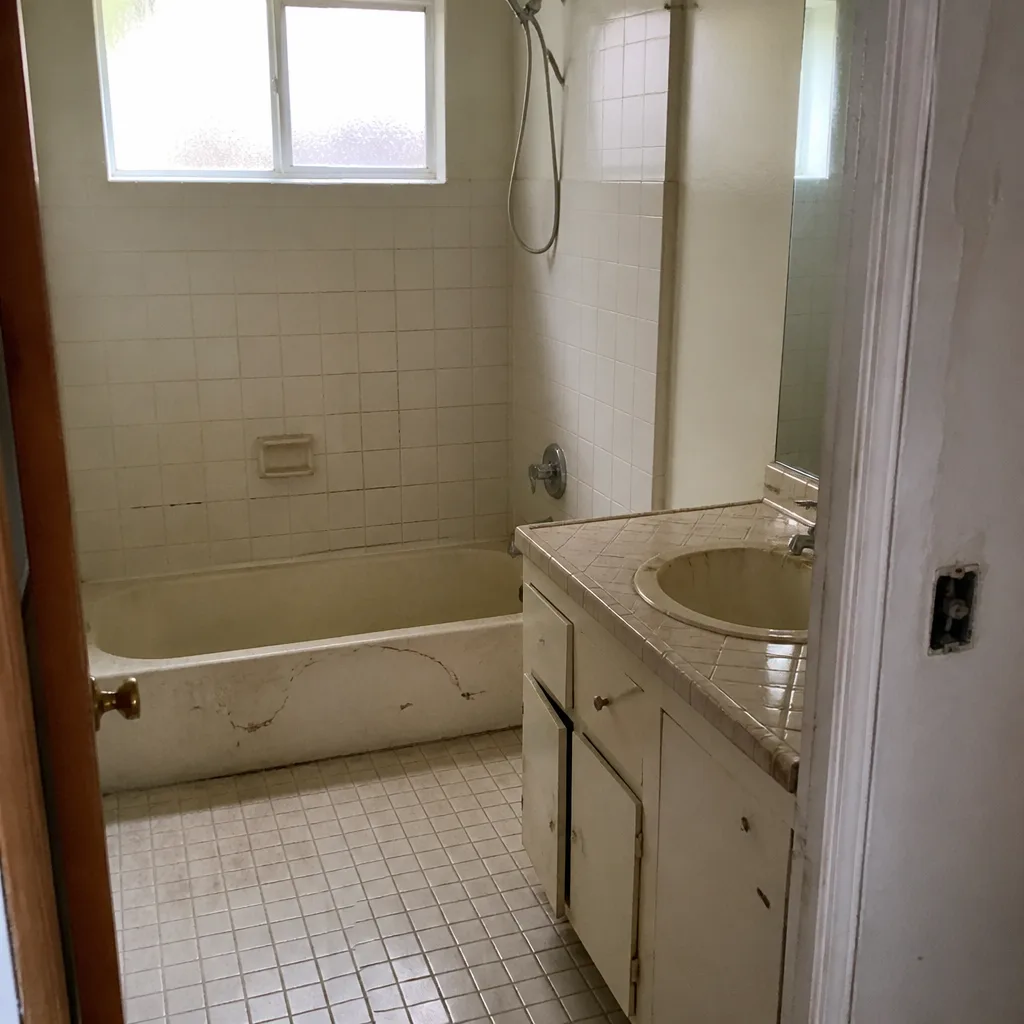 Before
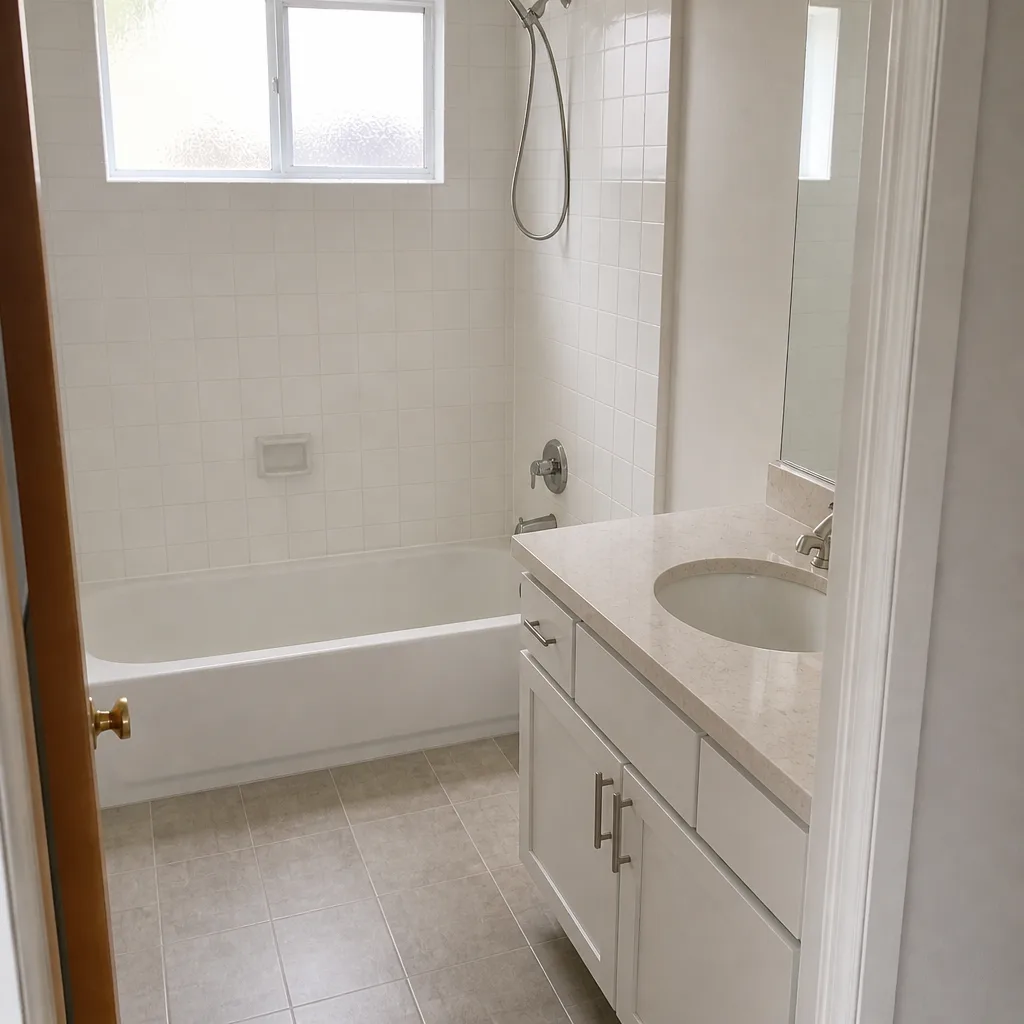 After