
Last updated November 17, 2026
 Driveway & pavers
 Kitchen remodeling
 Bathroom remodeling
 Home additions & ADU
 Roofing
 Windows & doors
 Fence
Free written scope consultation - allowances, timeline, and change-order rules on paper before a single trade is scheduled
DIY vs Professional Driveway & Pavers: What’s Safe to Do Yourself
Here’s what most paver crews won’t tell you: laying the pavers is the easy part. On a typical driveway, setting the pavers takes a skilled crew a day or two. The weeks of work that determine whether that driveway holds for 25 years or starts heaving in seven happen before a single paver is set, and that’s where most DIY attempts fail. We’ve pulled up enough failed driveway pavers around Irvine to see the pattern clearly. This guide breaks a paver driveway into its actual phases, rates each one honestly for DIY safety and skill, and tells you where the line sits. You’ll finish knowing exactly what you can handle yourself and what will cost you more to fix than to hire out.
Quick Answer
You can safely DIY paver sealing, joint sand replenishment, and minor spot repairs on an existing driveway. Excavation, subbase prep and compaction, and final grade drainage should be done by a professional. The base work is where driveways fail, and DIY compaction mistakes usually surface after a year or two as settlement, ruts, or standing water that no amount of new pavers will fix.
Styles & brands we work with
- Kitchen remodeling
- Bathroom remodeling
- Home additions & ADU
- Roofing
- Windows & doors
- Driveway & pavers
- Fence
Table of Contents
- The Phase-by-Phase Breakdown: What’s Safe and What Isn’t
- Why a Rented Plate Compactor Is Not the Same as Proper Compaction
- The Real Cost of Professional-Grade Base Tools
- What You Can Legitimately DIY Without Voiding a Warranty
- Irvine Climate, Soil, and Drainage: Why Local Conditions Change the Math
- Permits, HOA Rules, and Irvine Code
- How to Vet a Paver Contractor: Five Questions That Separate Specialists from Generalists
- Common Mistakes to Avoid
The Phase-by-Phase Breakdown: What’s Safe and What Isn’t
A paver driveway isn’t one job. It’s eight or nine separate phases, each with its own tools, skills, and failure modes. Rating each phase honestly is the only way to answer the DIY question without hand-waving.
We rate each phase on two axes: DIY skill rating (how much technical skill the work demands) and consequence of failure (what happens if it’s done wrong). Where the consequence is severe, DIY is a bad bet no matter how handy you are.
- Design and layout planning – Skill: medium. Failure: moderate. You can sketch and measure; getting the grading plan right is harder.
- Permit and HOA approval – Skill: low. Failure: high. A missed approval can force removal.
- Excavation – Skill: medium. Failure: moderate. Depth errors compound downstream.
- Subbase installation (aggregate base) – Skill: high. Failure: severe. This is the foundation.
- Compaction – Skill: high. Failure: severe. Under-compacted base is the #1 cause of paver failure.
- Edge restraint installation – Skill: medium. Failure: moderate. Edges migrate without proper restraint.
- Bedding sand and screeding – Skill: high. Failure: moderate. Uneven bedding causes rocking.
- Paver installation – Skill: medium. Failure: low. Cosmetic and fixable.
- Cutting and edge fitting – Skill: high. Failure: low. Ugly but recoverable.
- Joint sand and sealing – Skill: low. Failure: low. Genuinely homeowner-friendly.
The pattern is uncomfortable: the phases with the highest skill requirement also have the highest consequence of failure, and they’re the phases most DIYers assume they can handle. Excavation and paver-setting feel intuitive. Compaction feels like running a machine back and forth. It isn’t.
Why a Rented Plate Compactor Is Not the Same as Proper Compaction
You can rent a plate compactor for a Saturday. You cannot rent the knowledge of what proper compaction actually means in measurable terms, and that gap is why weekends are when DIY driveway disasters are born. Compaction isn’t a feel. It’s a spec.
When we build a paver base in Irvine, compaction means achieving a minimum density measured in the field. On residential driveways, that’s typically 95% or higher of the maximum dry density as determined by a standard Proctor test. That percentage is not a vibe. It’s a number a technician reads off an instrument called a nuclear density gauge or a lightweight deflectometer.
Here’s what homeowners miss:
- Moisture content matters as much as passes. Aggregate base compacts at its optimum moisture content. Too dry and it won’t densify. Too wet and it pumps. The window is narrow.
- Lift thickness matters. Base installed too thick won’t compact through. It has to go down in lifts of 4 to 6 inches, compacted between lifts.
- Pass count matters. Compaction is a function of passes at a given amplitude. “Two or three times” is not a spec.
- Plate compactors don’t reach deep enough. A plate compactor works the top few inches. Reaching 8 to 10 inches of base requires a vibratory plate with sufficient weight or a jumping jack compactor, and even then the depth rating has to match.
Irvine’s soils are mostly decomposed granite and sandy loam, which compact reasonably well but only under the right moisture. When compaction is off by even a few percentage points, you won’t notice in month one. You’ll notice it in year three when the driveway ruts under the same tire path and the pavers start rocking. By then, fixing it means pulling up the pavers, re-excavating, and starting over.
The Real Cost of Professional-Grade Base Tools
The economics of DIY base prep rarely work out, and here’s the honest math. To do compaction to spec, you need tools most homeowners will use once.
- Vibratory plate compactor (heavy, 200+ lb class) – rentable, around $90 to $150 per day, but the weight class that reaches residential driveway depth is the higher end of that.
- Jumping jack tamper – $70 to $110 per day rental for the deep lifts.
- Laser level and grade stakes – $100 to $200 to buy or $40 to $70 per day to rent. Essential for the grade and slope.
- Hand tamper – $40 to $80 to buy. Not sufficient on its own for a driveway.
- Wheelbarrow and shovels – $150 to $300 to buy. Often already owned, sometimes not.
- Bedding sand screed rails and screed – $80 to $150 to make or buy. Hard to rent correctly.
- Wet saw with diamond blade – $60 to $120 per day to rent, or $300+ to buy.
- Delivery of base aggregate – $400 to $1,200 for a typical Irvine driveway depending on depth and area, before any labor.
Add up rentals, materials you’ll use once, and the value of a weekend or two of hard labor, and the rounding error that separates DIY base prep from a professional quote shrinks fast. When a quote comes in around $8,000 to $18,000 for a full paver driveway in Irvine, the base work is a meaningful fraction of that, but the economic irrationality of DIY isn’t the base cost. It’s the cost of doing it twice.
Compaction testing on a small residential job usually isn’t included in a DIY budget at all, and there’s no practical way to self-test. If you’re going to do the base work yourself, know that you’re accepting that failure will be silent for the first few years. Read more about the full-scope build at our Driveway & Pavers in Irvine page.
What You Can Legitimately DIY Without Voiding a Warranty
If you hire out the whole job, you’re not locked out of maintenance. There’s real, honest DIY available on a paver driveway, and it won’t void a workmanship warranty if you do it correctly.
Safe DIY tasks:
- Joint sand replenishment. Polymeric or regular joint sand washes out over a few seasons. Refilling joints to within an eighth inch of the paver chamfer is a routine homeowner task and typically doesn’t affect warranty.
- Sealing. A penetrating or film-forming sealer applied correctly extends paver life and keeps sand in place. Product choice matters for Irvine’s sun – a film-forming sealer can discolor in the hottest summer. Penetrating sealers are safer for DIY.
- Weed and moss control. Manual removal and targeted spot treatment are fine. Avoid pressure washing at pressure high enough to displace joint sand.
- Moss and stain removal on the surface. A soft wash with a mild cleaner, followed by a rinse, is fine for the pavers.
- Snow and debris removal – not relevant in Irvine, but correspondingly, you’ll want to sweep leaves and keep the driveway clear of the occasional winter debris.
Tasks that can void a warranty or create liability:
- Excavating and re-installing pavers yourself after a contractor has installed them, then claiming warranty on that section.
- Cutting into edge restraints to install something (irrigation, lighting) without sealing the cut.
- Pressure washing at high pressure that displaces bedding sand and destabilizes pavers.
- Adding sand over the pavers without brushing it in, creating a surface haze that later stains.
One careful note: if you’re having any concrete or grading work done alongside – a retaining wall, an ADU pad, or fencing – coordinating those trades with the driveway is far easier through one contractor. Our Home Additions & ADU in Irvine team regularly coordinates driveway and grading work with structural builds for exactly this reason.
Irvine Climate, Soil, and Drainage: Why Local Conditions Change the Math
Irvine sits on a mix of decomposed granite, clay, and sandy loam depending on the neighborhood. That matters because compaction behavior, drainage, and heave all vary block by block. Here’s what we see on Irvine jobs:
- North Irvine and Tustin Ranch-adjacent soils drain better but require deeper base because decomposed granite shifts. Base depths of 6 to 8 inches compacted are common.
- Older parts of Irvine with clay subsoil hold water. If the base isn’t compacted and graded to shed water, a single December rain can find the low spot.
- Irvine’s summer sun is brutal on pavers and sealers. Light-colored pavers and penetrating sealers perform better than dark pavers and film-forming sealers, which can show heat blush.
- Winter rain comes in concentrated storms, not drizzle. Drainage plan matters more here than in most of Southern California because Irvine’s storms deliver a lot of water in a short window.
That’s why we plan slope and outlet locations before we ever break ground. A driveway that sheds water correctly needs a minimum slope of 1 to 2 percent away from the garage or structure. If you don’t handle that in grade, water will find the slab or the base, and the pavers will move. See our Groundwork Construction Co. of Irvine home for how we coordinate driveway work with the rest of the site.
Permits, HOA Rules, and Irvine Code
Irvine is a planned community with significant HOA presence, and that adds layers most DIY guides ignore. Here’s what to know before you lift a shovel.
Permits: Most driveway replacements or expansions in Irvine require a permit through the City of Irvine, especially if you’re changing the footprint, changing the slope, or modifying the connection to the street or storm drain. Straight replacement at the same footprint and same grade sometimes doesn’t need a permit, but confirming that before work starts saves you a stop-work order.
HOA approvals: Many Irvine HOAs require architectural review for driveway changes. Pavers, colors, edge material, and drainage changes can all trigger approval. Getting approval after a build has started can mean removing work.
Grading: Any change in grade that affects drainage onto a neighboring property can trigger additional review. Irvine enforces drainage patterns more strictly than many other Orange County cities.
Street encroachment: If your driveway touches the sidewalk or street, there may be city requirements on the apron or the transition. A paver driveway that meets an existing concrete apron needs the transition handled with care.
The practical takeaway: the permit and HOA step is a real phase, and it’s the one most DIYers skip. It’s also where a contractor with Irvine experience earns their keep. If you’re adding a fence at the same time, our Fence Installation in Irvine team handles a lot of drive-and-fence packages where the grading has to line up.
How to Vet a Paver Contractor: Five Questions That Separate Specialists from Generalists
If you decide to hire out, the vetting matters more than the price. Here are the five questions that filter real paver specialists from general landscapers who “do pavers on the side.”
- What is your compaction spec, and how do you verify it? A real paver specialist will tell you a number (typically 95% or higher of maximum dry density) and mention field testing. If the answer is “we tamp it really well,” walk.
- What base depth do you plan for this driveway, and why? The answer should reference your soil type, your driveway use, and your local conditions. A one-size-fits-all answer means they aren’t’ thinking about your site.
- How do you handle drainage and grade? They should be able to explain slope direction, outlets, and how the driveway ties into the garage slab and street.
- Who pulls the permit and handles HOA approval? A specialty paver contractor either handles both or coordinates with you explicitly. If either is “your responsibility,” ask why.
- What’s your warranty, and does it cover the base? The base is the failure point. A warranty that covers pavers only isn’t’ covering the part most likely to fail.
There’s one more question worth asking: what’s the actual written quote, line-itemized? At Groundwork Construction Co. of Irvine, our quotes spell out material, base preparation, and labor as separate lines, so you can see exactly what you’re paying for. We also stand behind every paver installation with the 730-Day Done Right Promise, one of the longest workmanship guarantees in the residential construction space. If it’s not done right, we make it right.
Common Mistakes to Avoid
- Renting a compactor and skipping the moisture check. Compacting dry aggregate is like rolling a ball of dry sand. It looks fine, then fails. Check base moisture before compaction; it should be damp, not wet, and hold together loosely in your hand.
- Using concrete sand instead of bedding sand. Concrete sand is coarse and doesn’t screed smoothly. Bedding sand has to be washed and uniformly graded. This is a cheap-sounding mistake that causes rocking pavers within a year.
- Skipping HOA architectural review. Irvine HOAs are strict. A visible color or layout change without approval can require removal, and no contractor warranty covers that.
- Underestimating the strength of edge restraint. Edges migrate outward under vehicle load if the restraint isn’t’ a proper aluminum or plastic edge set into a concrete haunch. “We’ll just set the pavers tight to the grass” fails quietly over two seasons.
- Sealing too soon after installation. Fresh pavers need time to settle and outgas. Sealing too early traps moisture and can cause haze, and in Irvine’s heat, that haze bakes in.
- Grading without a laser level. Eyeballing a 1 to 2 percent slope over a 20-foot driveway is a 2 to 5 inch drop; the eye can’t’ see that. Use a laser level and check the grade before compaction.
- Letting a general landscaper “throw in” a paver driveway. Landscapers do a lot well. Paver driveways under vehicle load are a specialty, and the failure mode (settlement, ruts, rocking) shows up after the invoice is paid.
See the difference
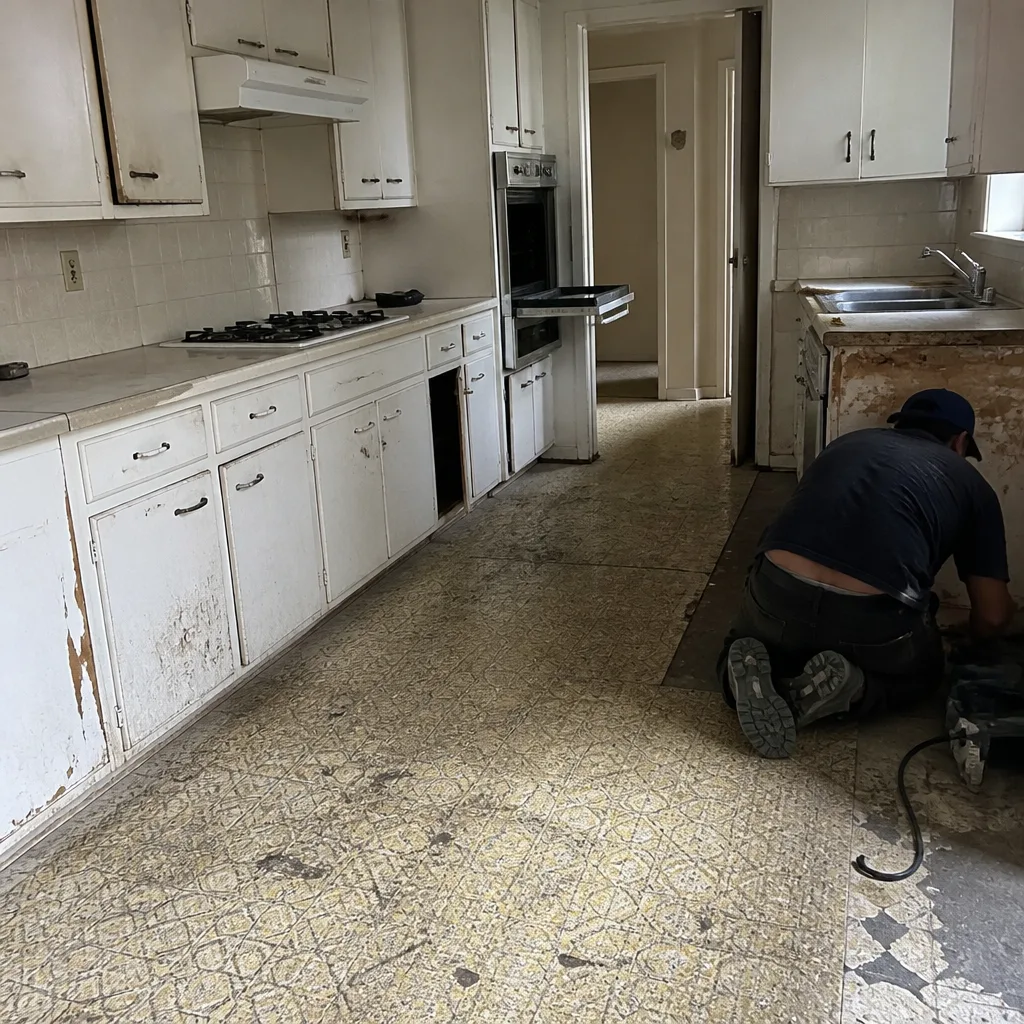 Before
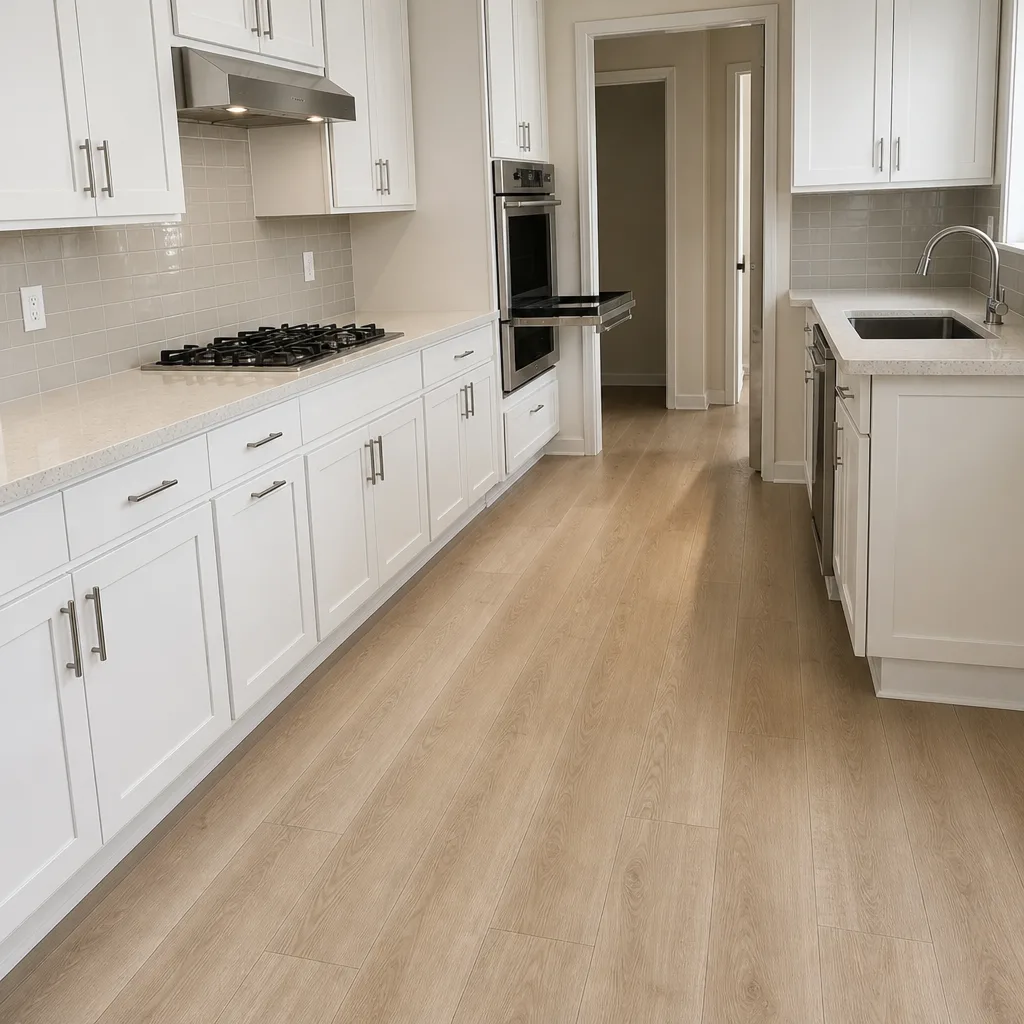 After
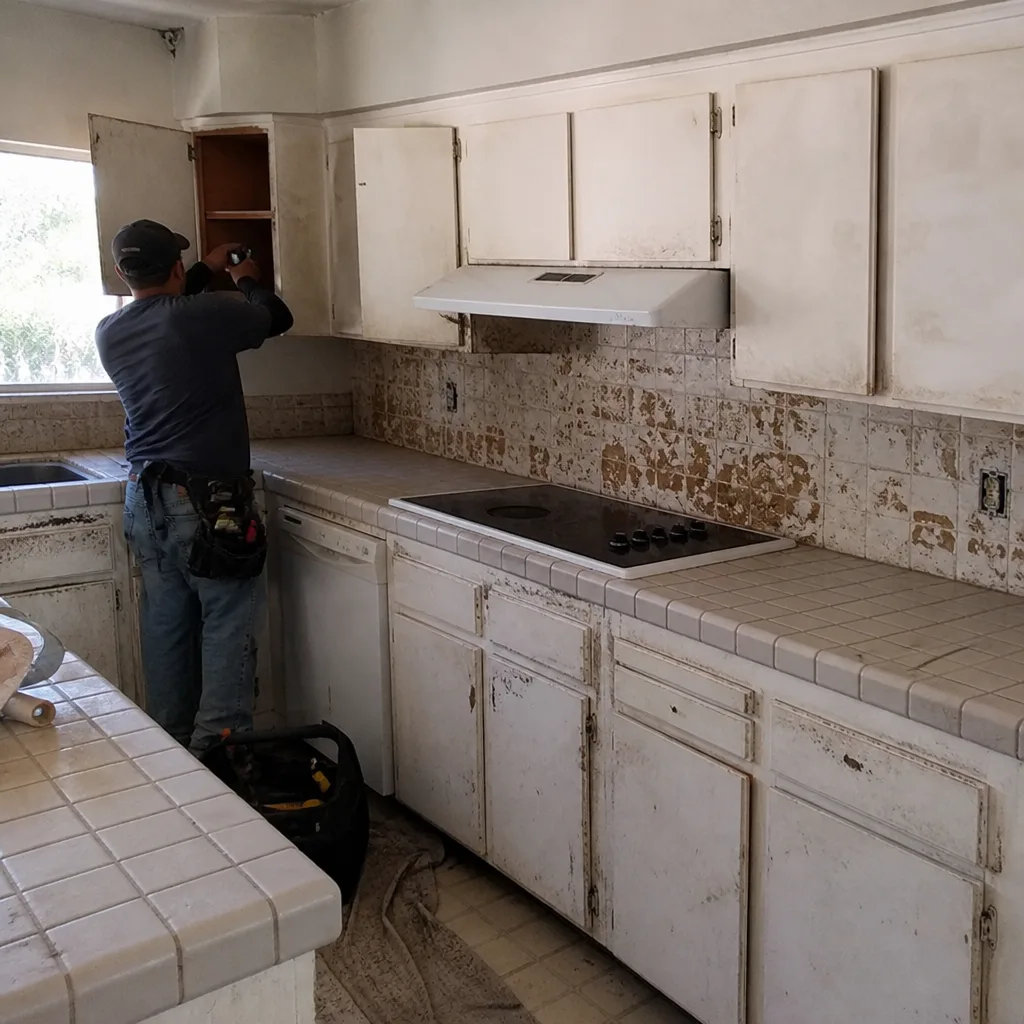 Before
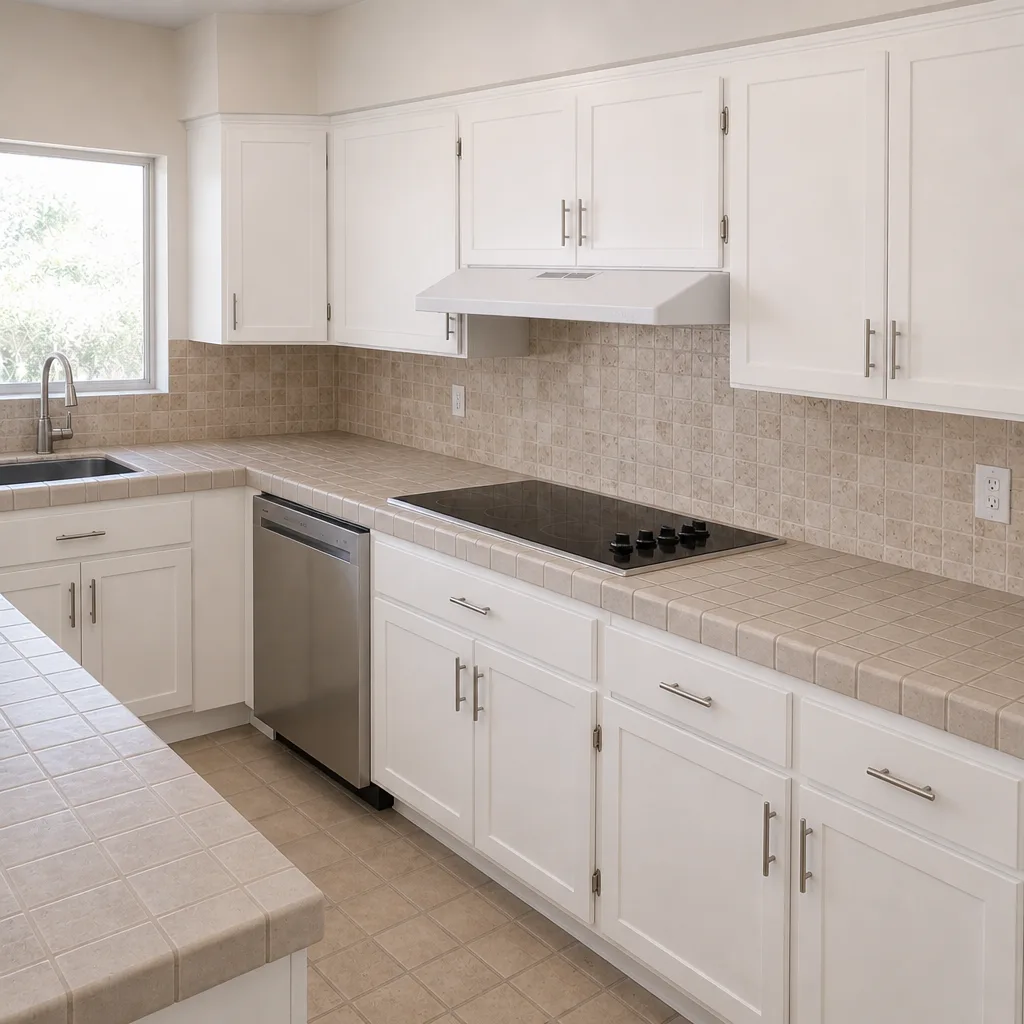 After
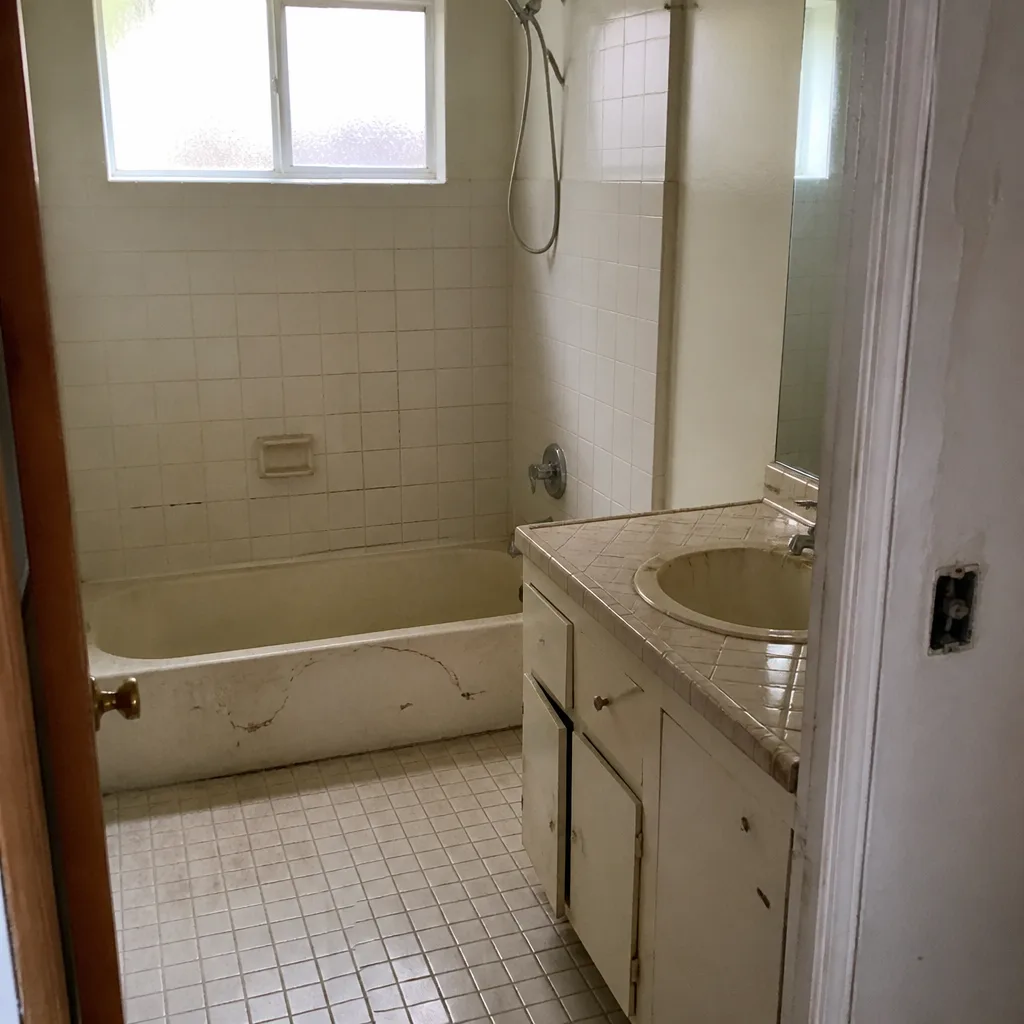 Before
 After
When to Call a Professional
Call a professional when the project involves excavation, base preparation, compaction, or any change in grade and drainage. That’s most of a paver driveway job. Call one immediately if your existing driveway is showing settlement, rocking pavers, or water pooling against the garage; those are signs the base has failed and DIY touch-up won’t fix them. Call one if your property is subject to HOA architectural review, if the driveway footprint touches the street or sidewalk, or if you’re coordinating with other work like a fence, ADU, or landscaping project. Groundwork Construction Co. of Irvine offers free estimates in Irvine. Call (888) 578-4462 to schedule yours, and we’ll walk the site with you before you decide what to take on yourself.
Frequently Asked Questions
Yes, technically, but the honest answer is that it usually fails at the base. Installing pavers is the easy part of the job; excavation, subbase installation, and compaction are the phases that determine whether your driveway lasts 7 years or 25. DIY paver setting is approachable for someone with patience and help. DIY base compaction is where most homeowner installations break down, and the failure shows up silently one to three years later. Call (888) 578-4462 for a free estimate if you want the base work done to spec.
A paver driveway in Irvine typically runs $8,000 to $18,000 for a standard two-car driveway, depending on base depth, square footage, paver selection, edge restraint, and whether existing concrete has to be removed. Base preparation and compaction are usually 30 to 40 percent of the total, which is why cutting corners on base work cuts the price but shortens the driveway’s life. Call (888) 578-4462 for a written, line-item quote on your specific site.
A correctly built paver driveway with compacted base and proper drainage lasts 25 to 30 years with routine joint sand replenishment and periodic sealing. Lifespan drops to 7 to 12 years when base compaction is poor, and replacement in that window usually means pulling and redoing the entire driveway, base included.
Only if the DIY work touches the section the warranty covers. Sealing, joint sand replenishment, and surface cleaning don’t affect a workmanship warranty when done correctly. Excavating, re-setting, or cutting into edge restraints inside the warranty period does. Ask for the warranty in writing before you hire, and read what’s covered. The 730-Day Done Right Promise on Groundwork Construction Co. of Irvine pavers covers the workmanship, not homeowner modifications to it.
Usually yes if you’re changing the footprint, grade, or connection to the street. Straight replacement at the same footprint and same grade sometimes doesn’t require a permit, but you have to confirm that with the City of Irvine before work starts. Many Irvine HOAs also require architectural review for driveway changes, and that approval can take weeks. Skipping either step can mean removing completed work.
It’s the single most important phase of the job and not an upsell. Compaction determines how long the driveway holds its grade under vehicle load. The measurable spec on residential paver driveways is typically 95% or higher of maximum dry density, and it’s tested in the field with a nuclear density gauge or lightweight deflectometer. A rented plate compactor doesn’t’ reach the depth needed for a driveway base without the right lift thickness, pass count, and moisture. Getting that wrong is why DIY driveways rut in the same tire paths within two years.
The Bottom Line
Some of the driveway project is genuinely yours to handle: sealing, joint sand, surface cleaning, and routine maintenance are all sensible DIY work. The base of the job – excavation, subbase, compaction, grade, and drainage – is where DIY most often fails, and it fails quietly, a year or two after the invoice is paid. Irvine’s soil mix, HOA rules, and concentrated winter rain make that base work harder, not easier. If you want to know where your property sits on this map, get a written quote that itemizes material, base prep, and labor. Groundwork Construction Co. of Irvine offers free estimates with upfront pricing, no surprises, and every installation is covered by the 730-Day Done Right Promise. Call (888) 578-4462 for a free estimate today.
Written by the team at Groundwork Construction Co. of Irvine.